Project Event Timeline
Positive Evaluation
2026, January
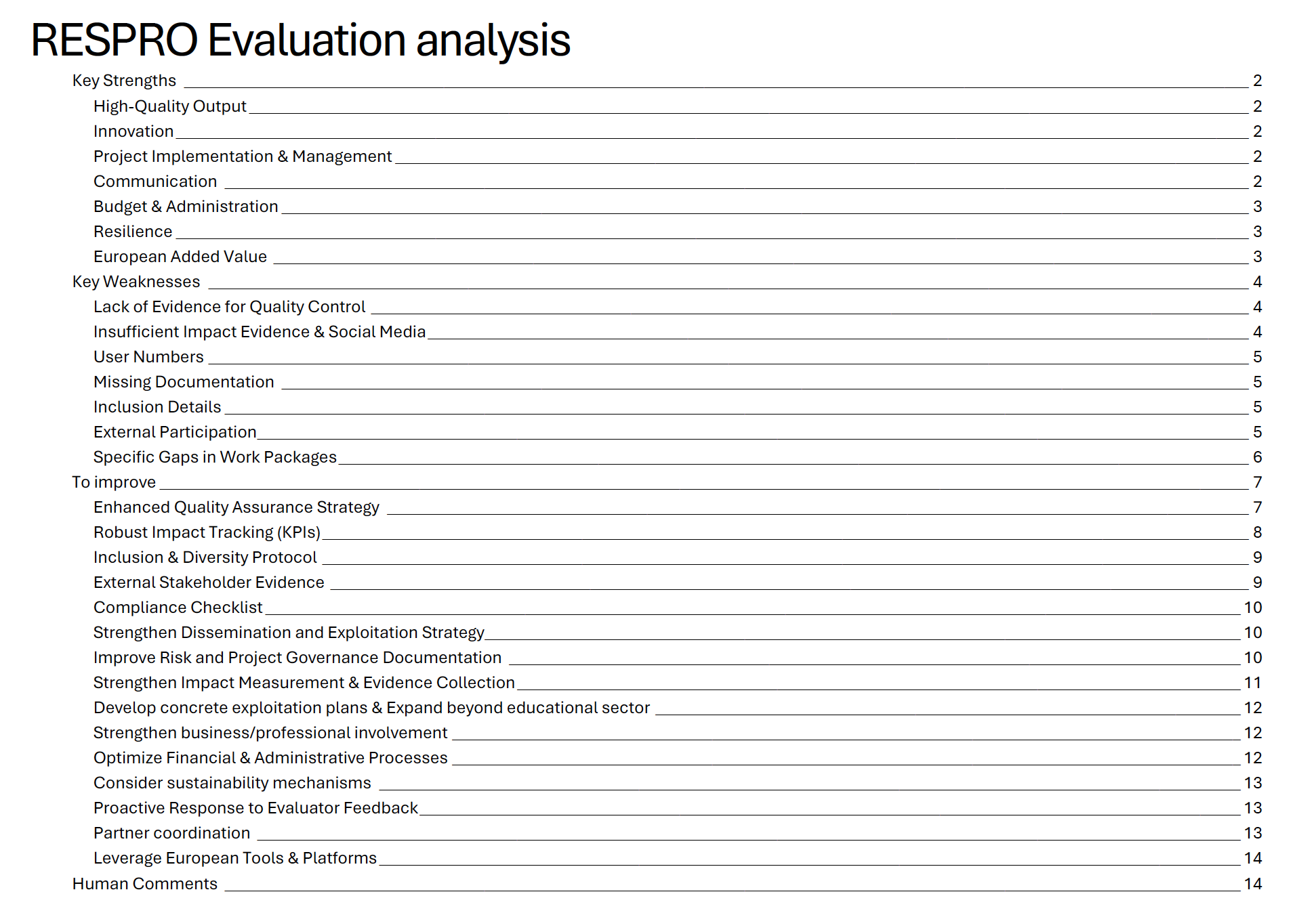
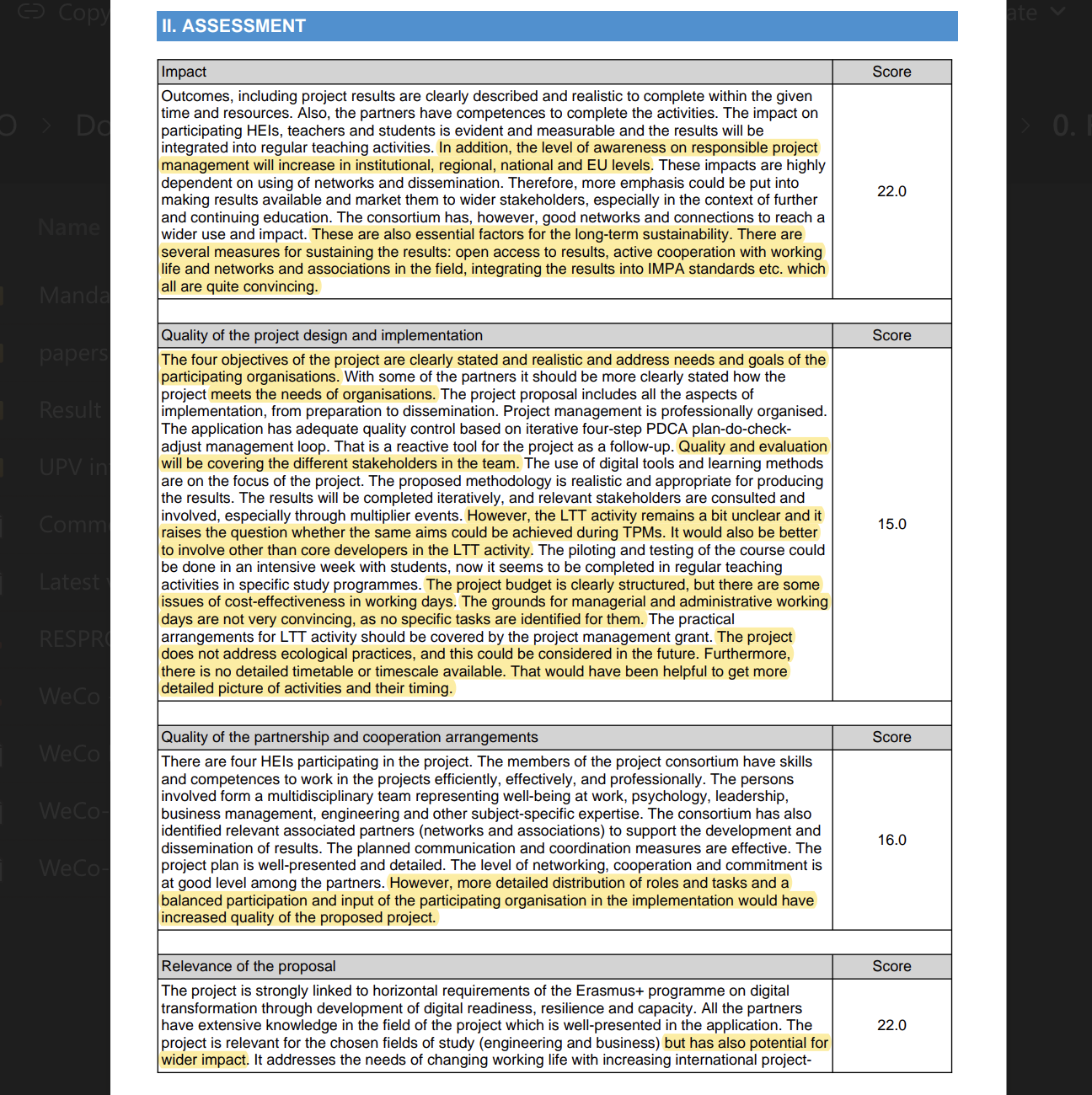
Finally, the project has been positively evaluated. Although we missed some aspects, the evaluation provided us with valuable feedback that we will use to improve future proposals. The photo shows the index of everything we were able to review.
After Project
2026, January
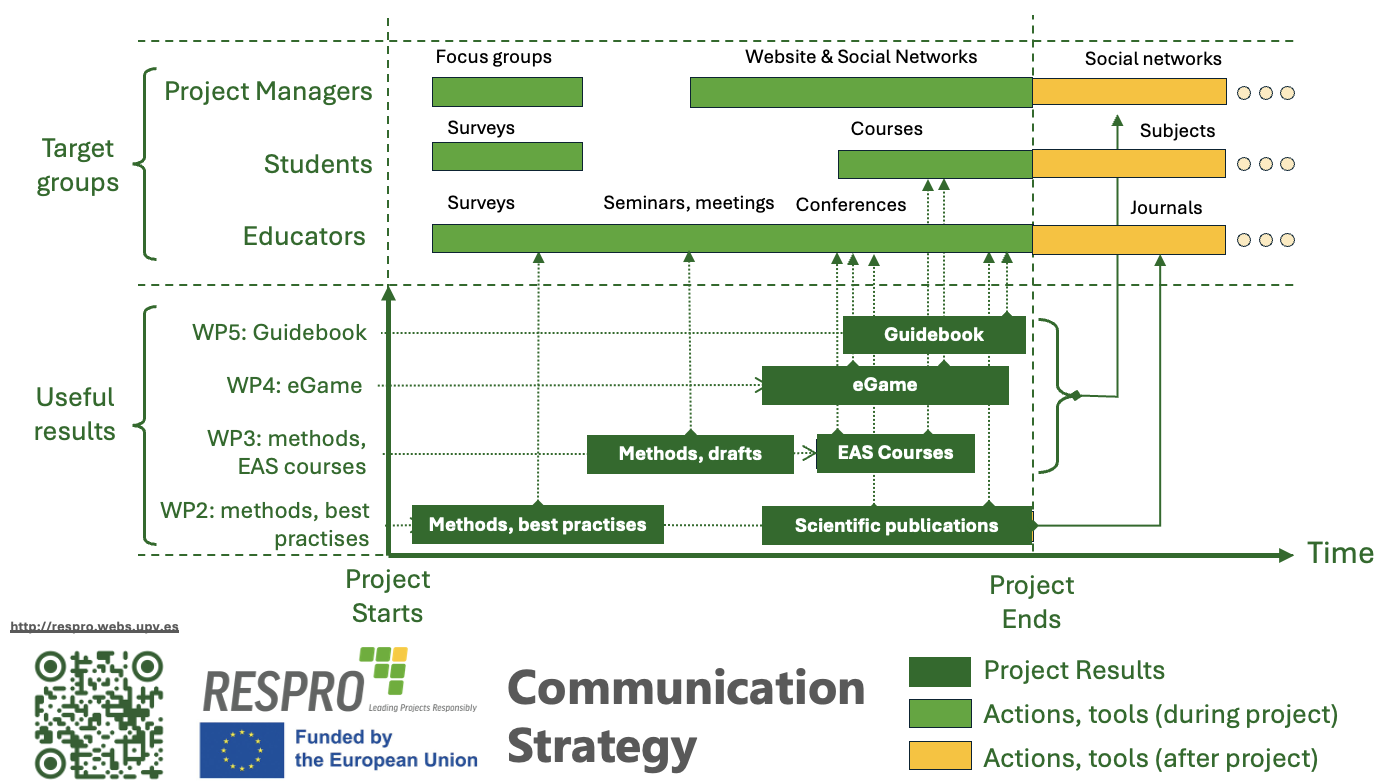
Projects, usually create posts to social networks, during their execution. However, once a project is completed, posting stops. Social media platforms have increasingly shorter “inactivity” periods, for example, 30 days in X. Therefore, after a project ends, more posts are necessary to ensure the dissemination of its results.
Project completed
2025, September
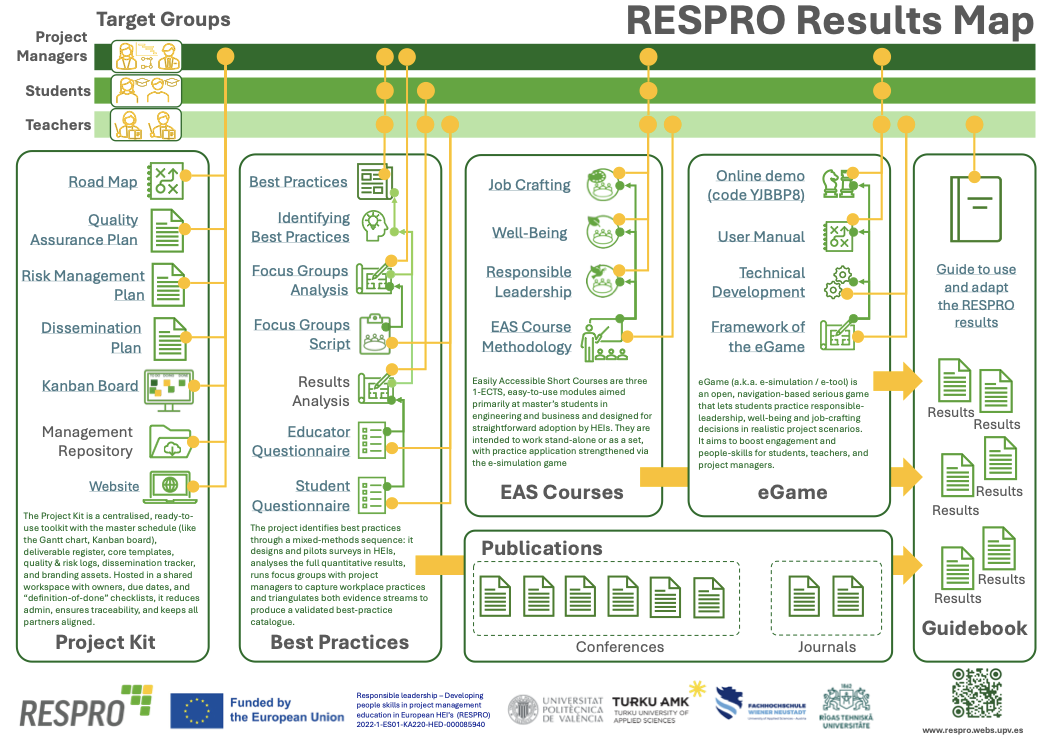
When a project is finished, the results are what remain. In the case of RESPRO, the “Results Map” is perfect for providing an overview of the work done. With the results map and its application, the project is complete.
Final months
2025, June-July
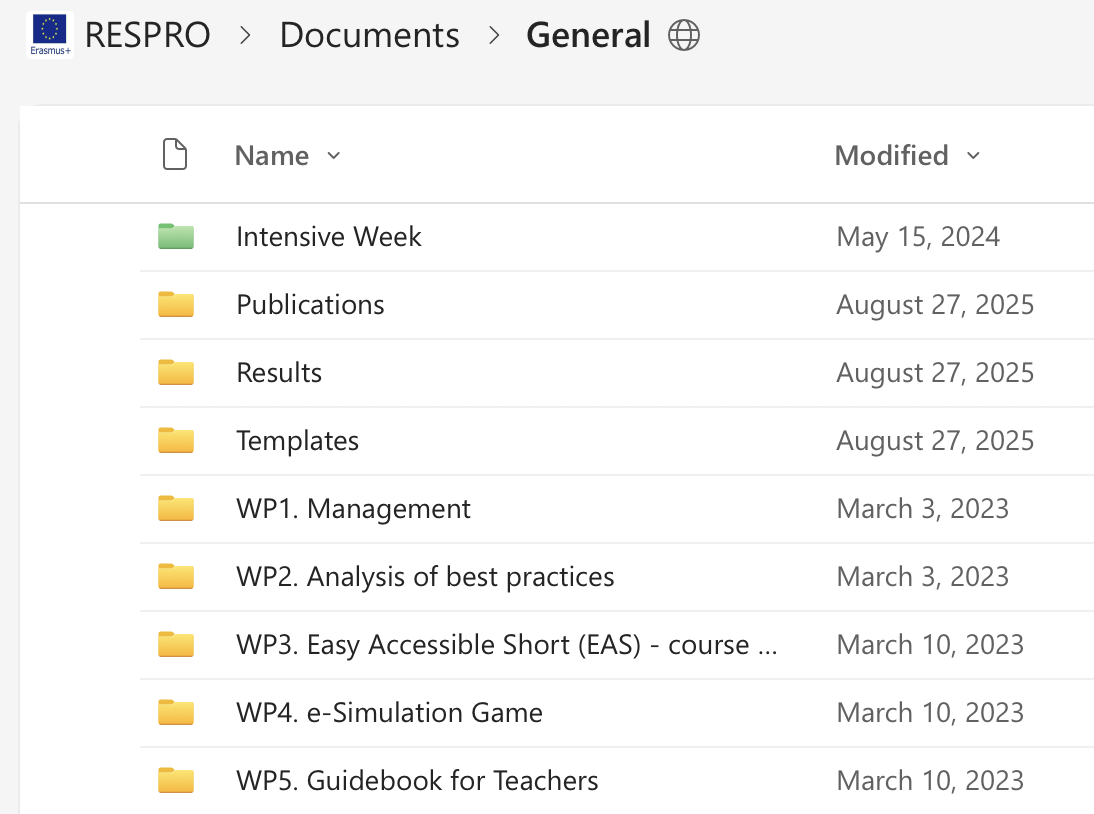
The final months are dedicated to finalising results, updating platforms, etc. This is where the organisation of folders in the document repository becomes invaluable, as it allows you to have everything at your fingertips and facilitates the writing of the final report.
Testing eGame
2025, June
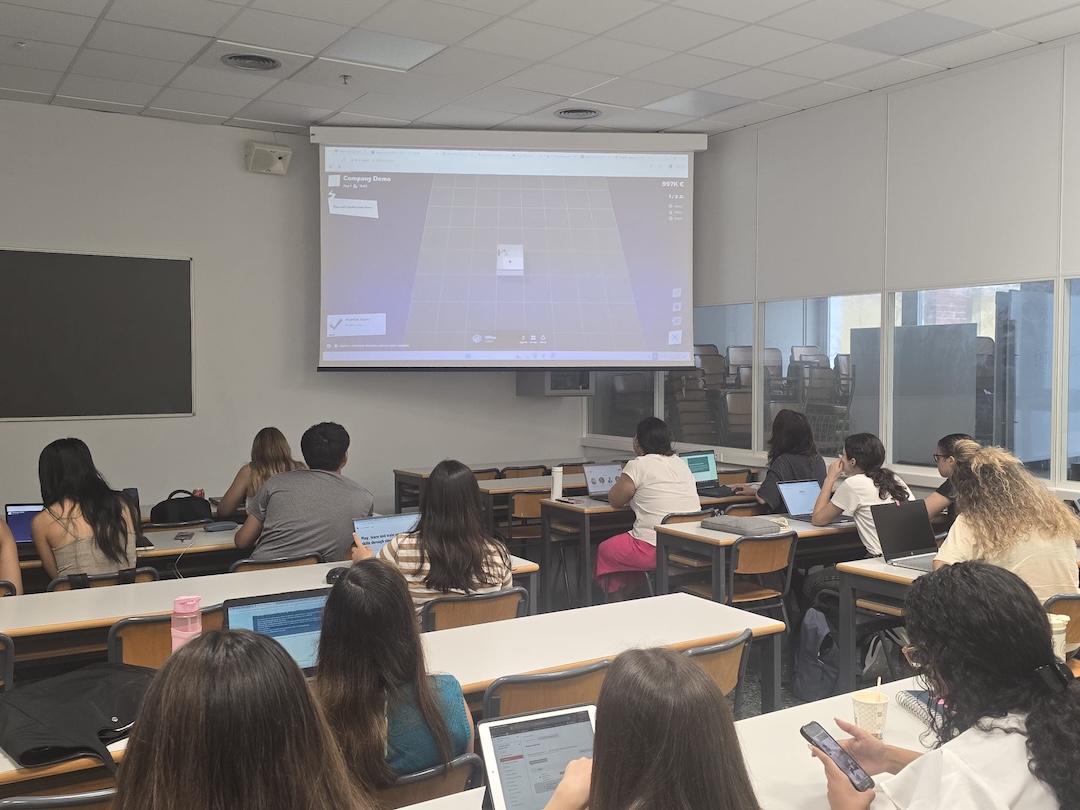
One of the latest products to be developed has been the eGame. In addition to the intensive week of testing, which allowed for some adjustments, the advanced version was tested with students from each of the universities.
Meetings
2025, May
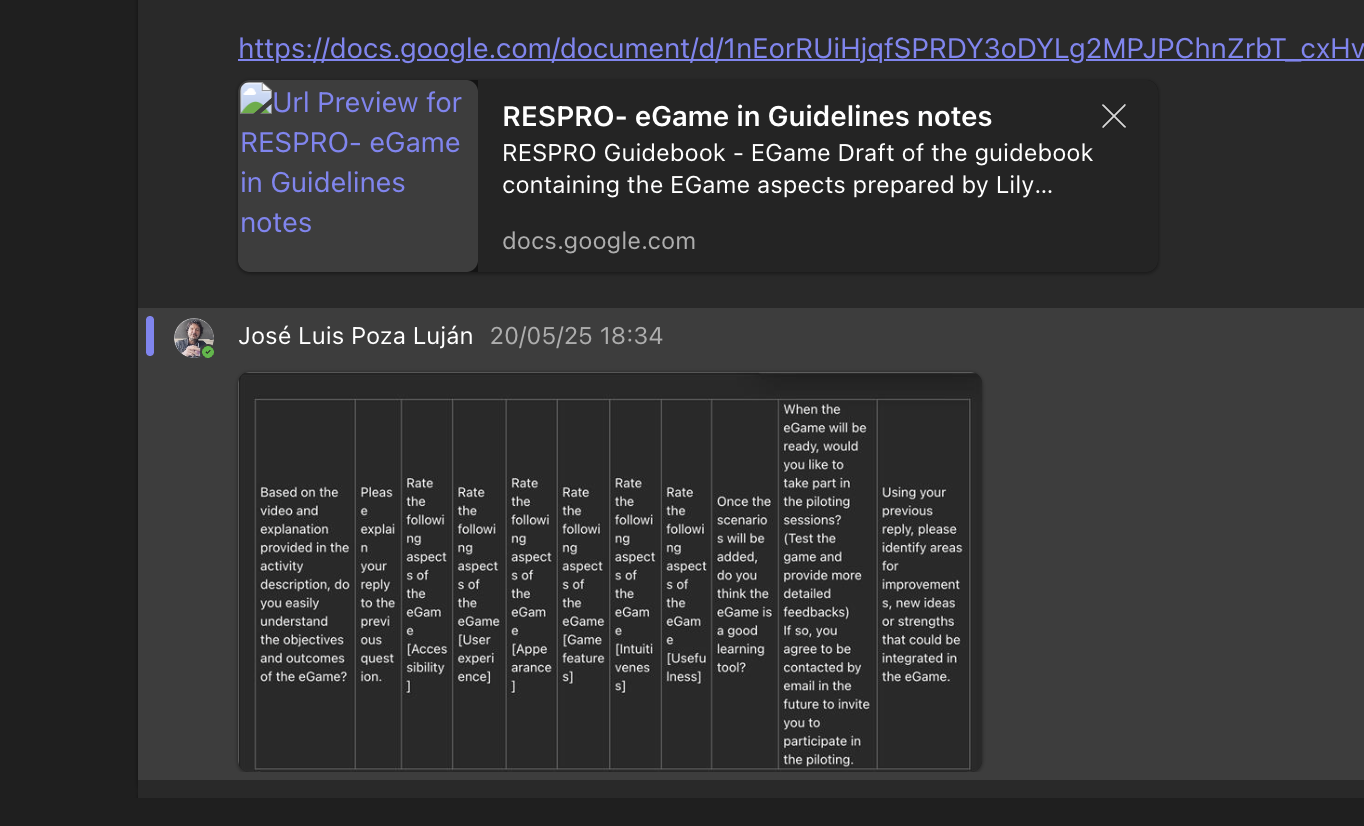
By the end of May, only a few loose ends remained; the eGame and the guidebook were still to be completed. These meetings are the most difficult, many months of work and the final product in sight.
Preparing for the final stretch
2025, April
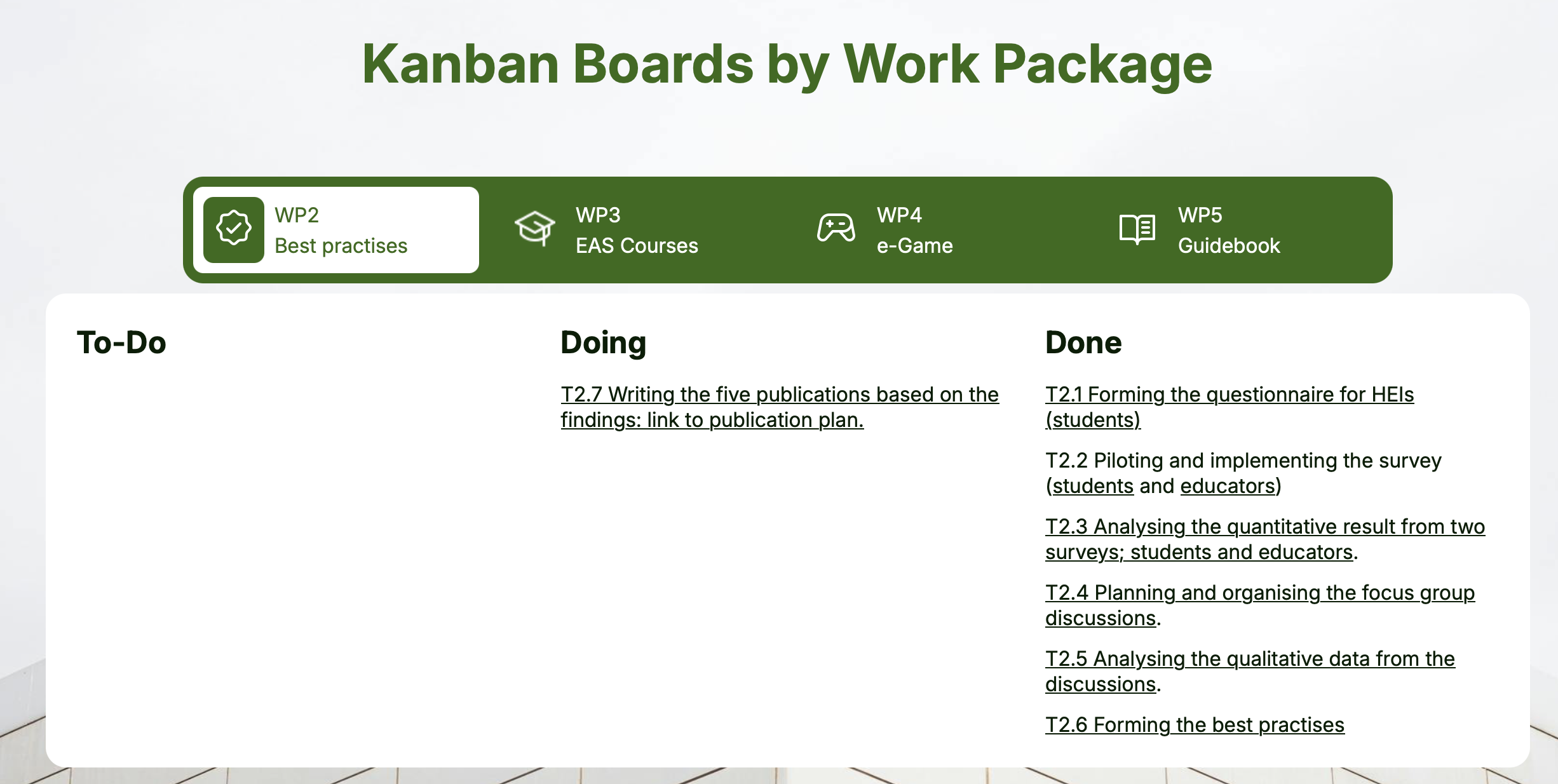
Preparing for the final stretch. In any project, before finishing, it’s essential to review everything to ensure it’s correct. A useful tool is the final project report. In our case, it confirmed the need to request an extension to allow time for finalizing publications and the Guidebook (work package 5).
Meetings to finish the Project
Early 2025
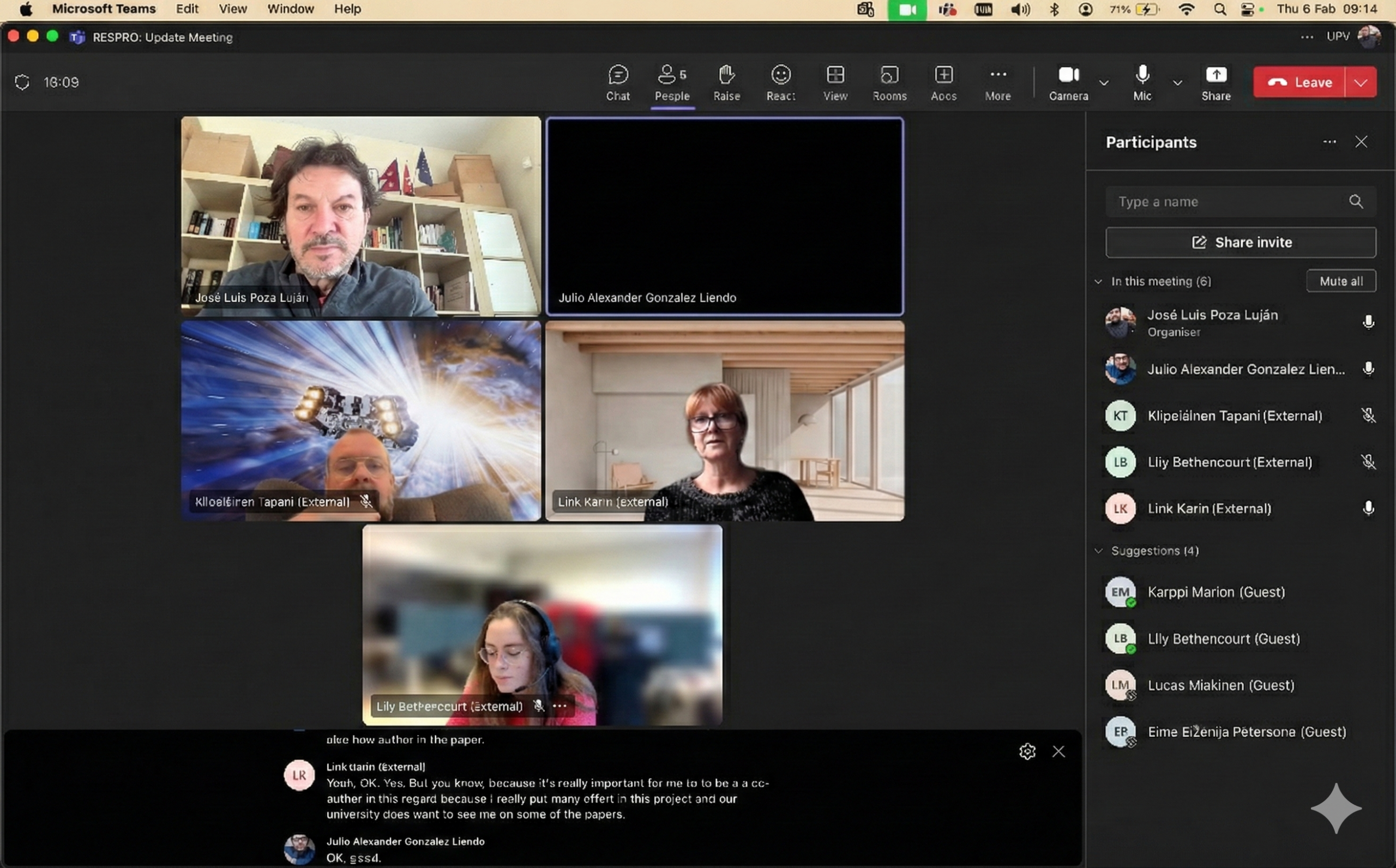
Pending tasks resumed in January 2025. Risk plans are necessary, even if they aren’t used, but if they are, having them is appreciated.
Design
2024, December
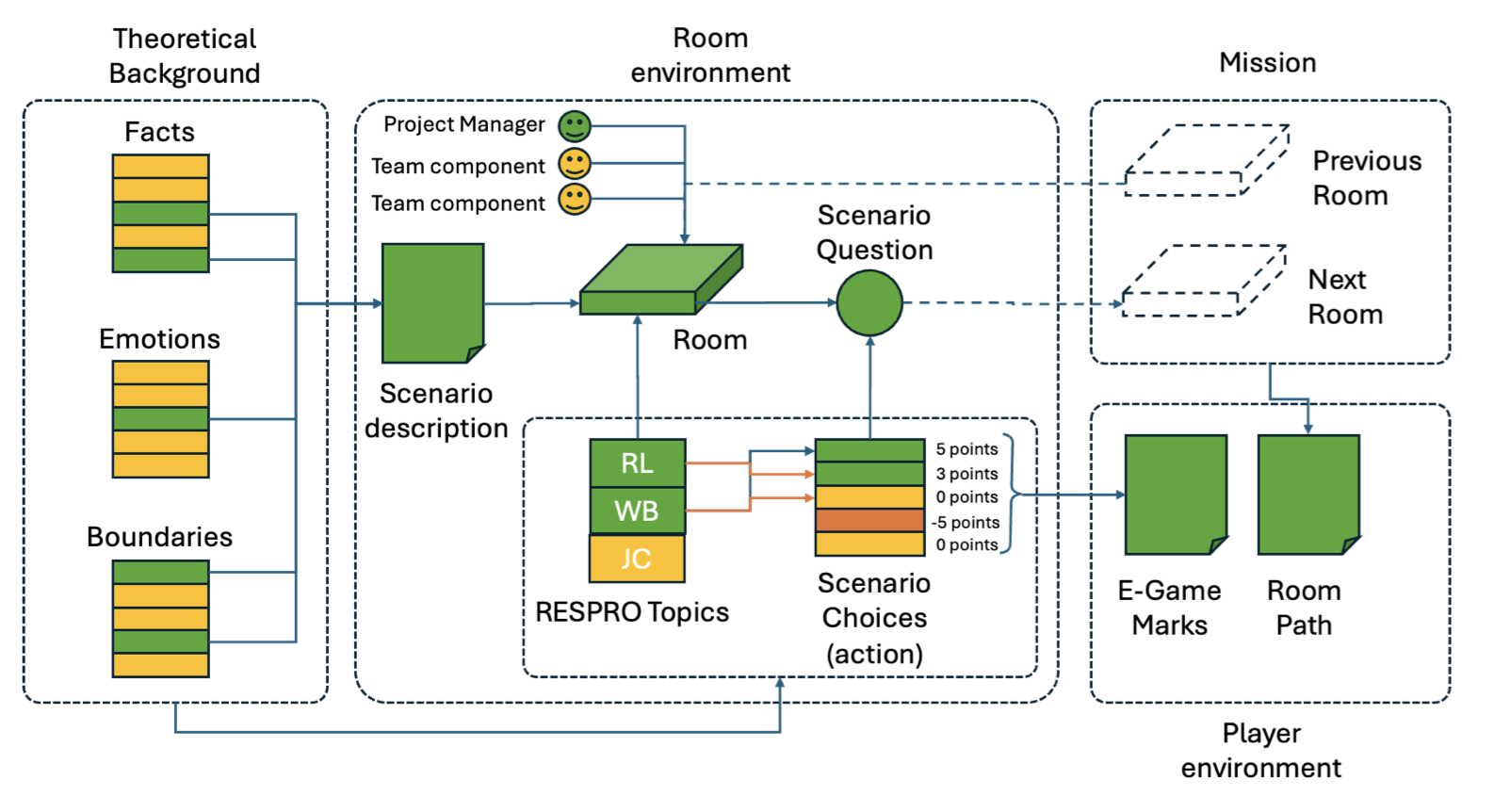
Designing an educational application involves several important aspects, especially in its design phase. In the case of RESPRO’s eGame, this design was meticulously developed from the very beginning and continuously evolved. One of the key elements was the concept of a “scenario” as a common setting where learning situations for responsible leadership skills take place.
Risks
2024, November
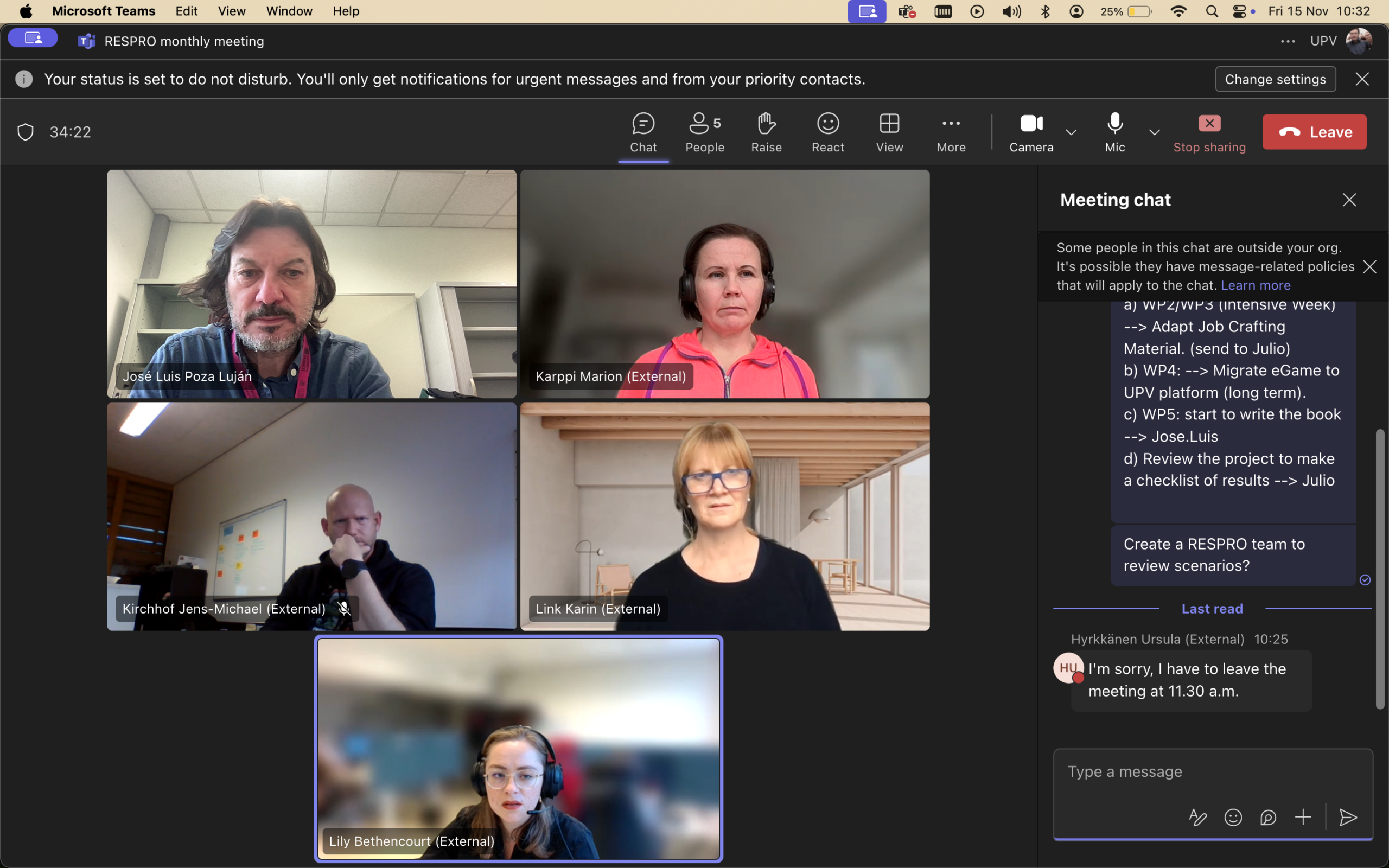
Risks are inherent in any project. A month after the intensive week, the DANA storm hit Valencia, forcing the coordinating university to switch to online teaching for over a month and a half, in addition to focusing on the priority: providing support. This, along with some administrative delays at the project’s inception, set back the work by more than two months. The risk management plan calls for intensive work and an attempt to accelerate progress to avoid requesting an extension. Spoiler alert: in the end, we had to request three months to finish the guidebook. In the profile picture, the meeting with the work session in which the tasks are rethought.
Meeting in Valencia (Intensive Week)
2024, October
One of the project’s milestones is the review of the final ESA Courses (work package 3) and the beta version of the eGame (work package 4). After internal reviews, it’s time for a joint synchronous review (meeting in the same place and time). The intensive week was used for this purpose. The image shows one of the sessions with five students (mainly Master’s students) from each partner university.

One of the advantages of a project with four partners from different countries is that, by forming student work teams, all the different nationalities can be mixed within the teams. One of the objectives in reviewing courses and games was to achieve this enrichment. The photos show work sessions in multicultural teams.
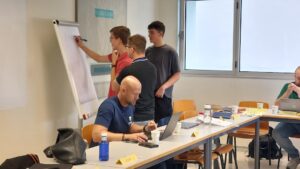

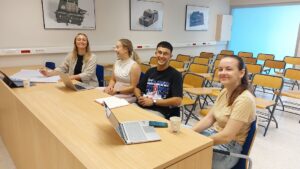
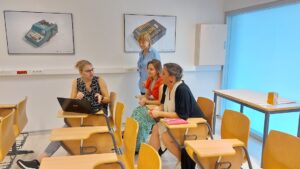
As with any in-person meeting, the project team members also took the opportunity to review project tasks and plan the remaining tasks.
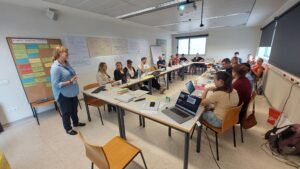
In the course workshops, the methodologies used were primarily active. The photo shows one of the reflection sessions, with the panel completed with the work cards.
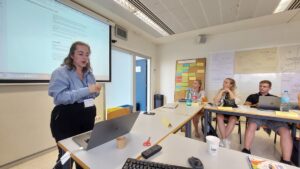
During the intensive week, the eGame was also one of the key events to review. The photo shows the presentation session.
As with any project, there’s always time for rest and work. The photos show the project team members at a meal and the FHWN team members (teachers and students) at the UPV.
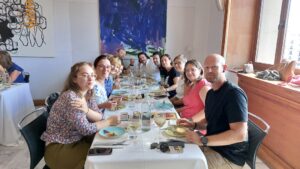
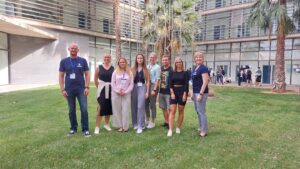
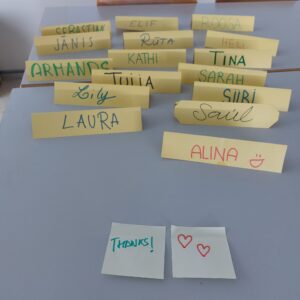
After several days and many hours of work, the intensive week comes to an end. As with any in-person work meeting, it’s all about results: tasks reviewed, a lot of work left to do, and, best of all, the participants.
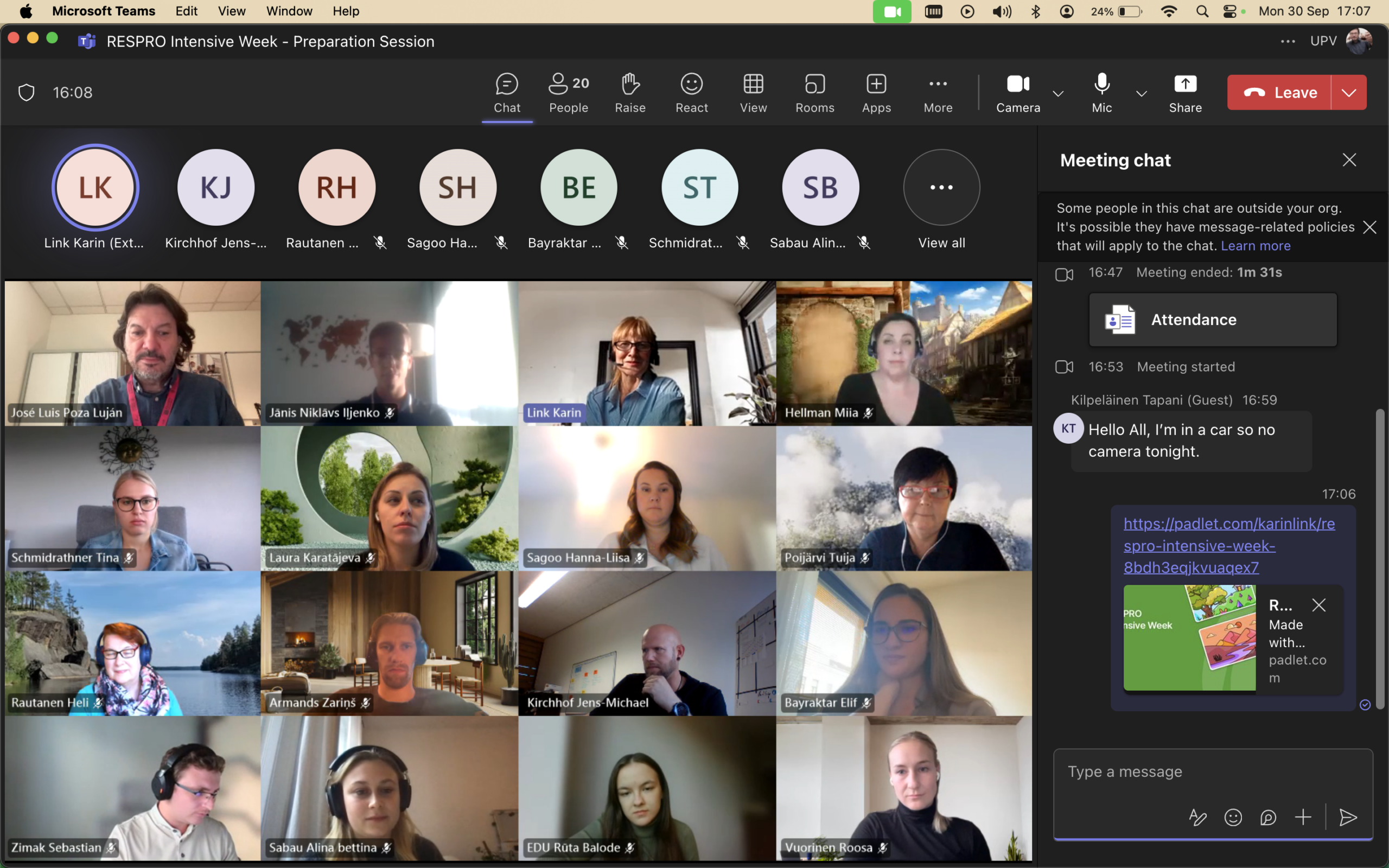
Preparing for the intensive week
2024, September
To ensure the success of an important meeting like the one scheduled to take place in Valencia, a week prior, all members of the project team, along with the students, met. This meeting, in addition to facilitating interaction among the students, allowed participants to have all their questions answered, both about the trip and the work itself.
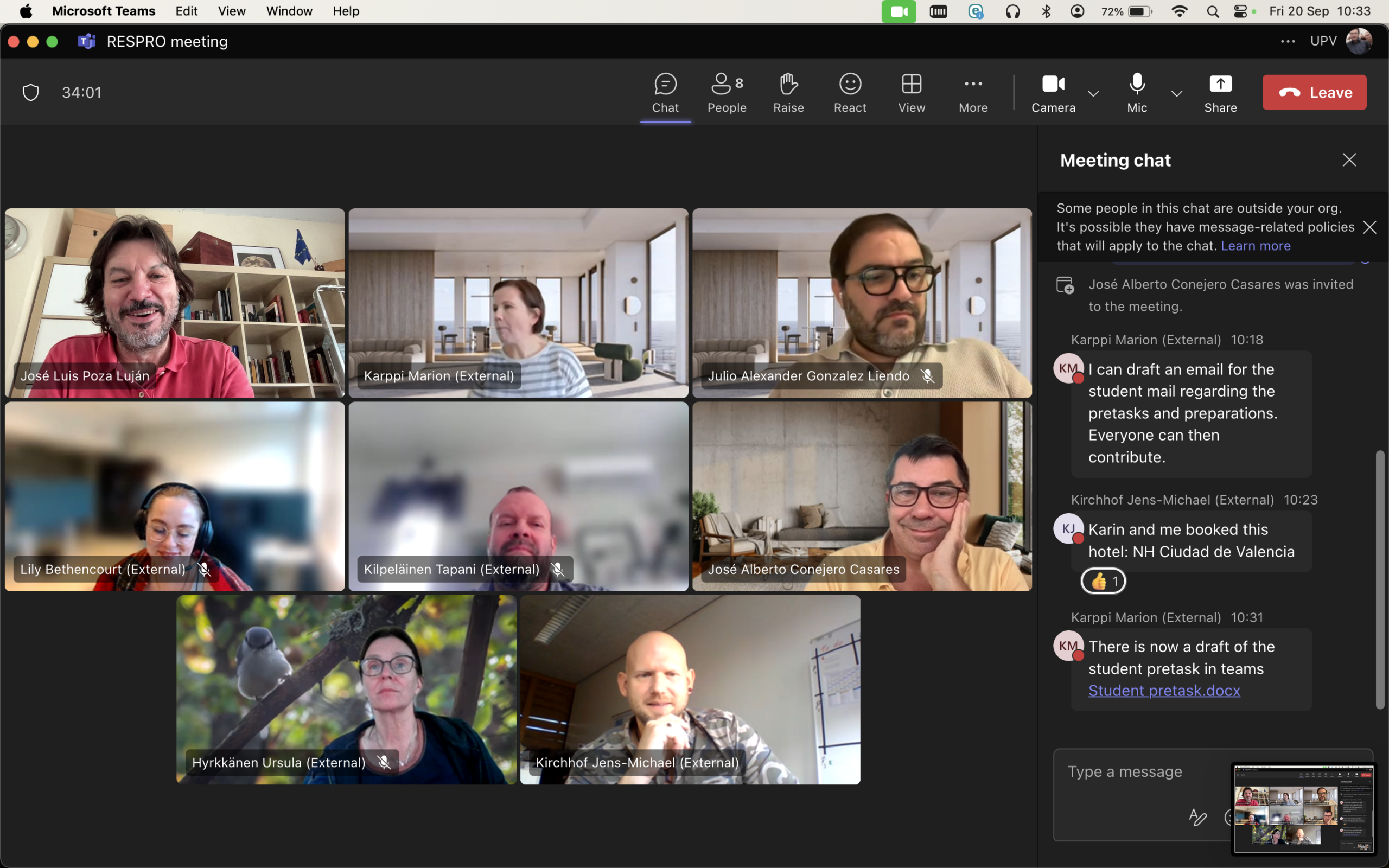
Courses are ready
2024, September
A month before the intensive week in Valencia, all the details must be finalized, the courses are ready to be taught to the students, and the eGame already has a beta version. It is important that these meetings are productive, as the quality of a project depends on this coordination.
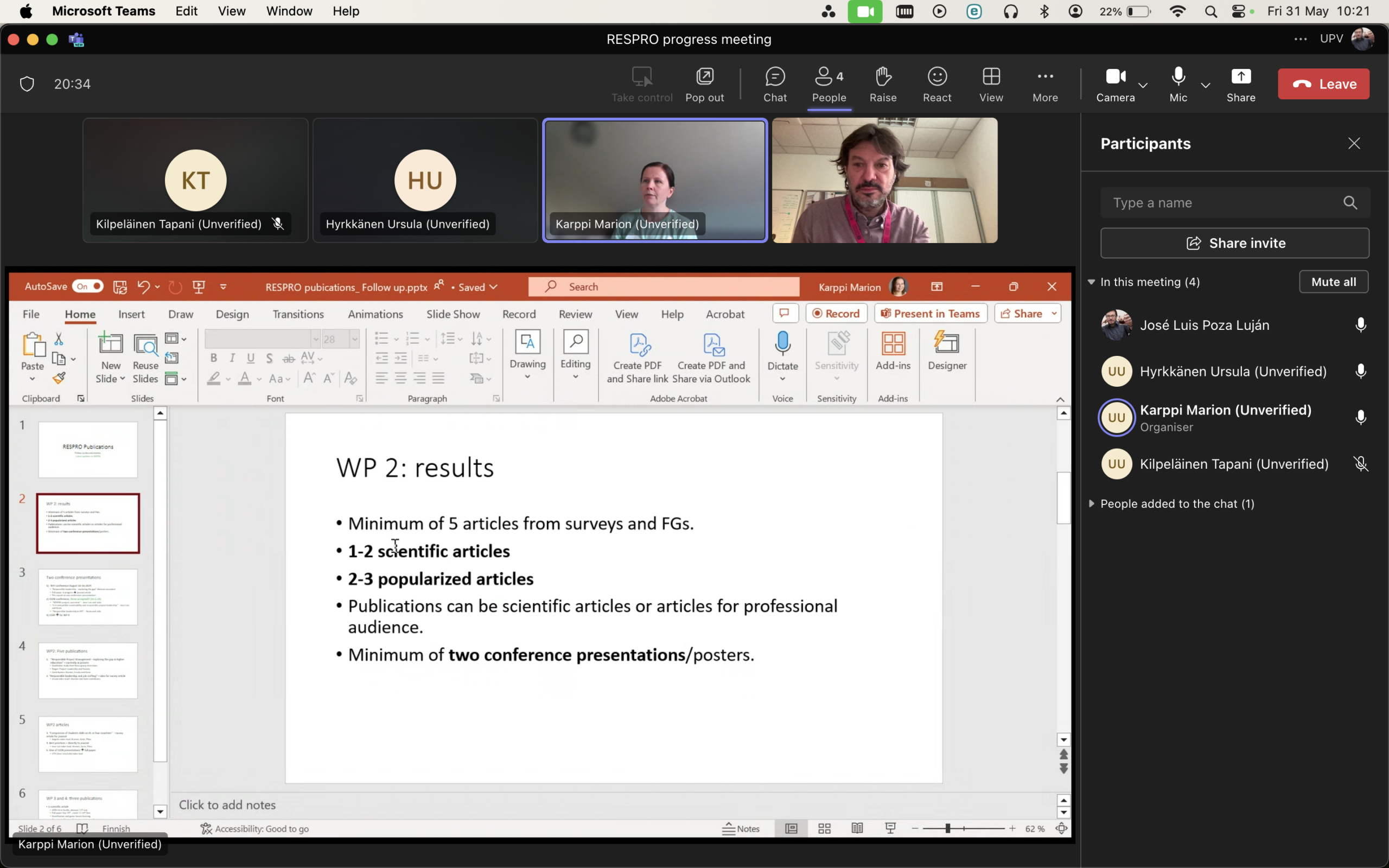
Reflections from the meetings.
2024, May
After the meetings it is important to check how progress is being made, how the completed work packages end up when the results are disseminated.
Meeting in Riga
2024, May
In May 2024, a meeting was held in Riga to review all the aspects developed. The results of work package 2 were released, and the meeting focused on working on the EAS courses (work package 3) and the eGame (work package 4).
As with the meeting in Wiener Neustadt, a lot of work was done in Riga, as one work package (WP2) was completed and another work package (WP3) was prepared for testing at partner universities and in October with students during the intensive week.
It’s very important to consider the value of in-person collaboration. These meetings, or rather working sessions, are essential, especially when the project is already well underway.
Project Decisions
2024, March
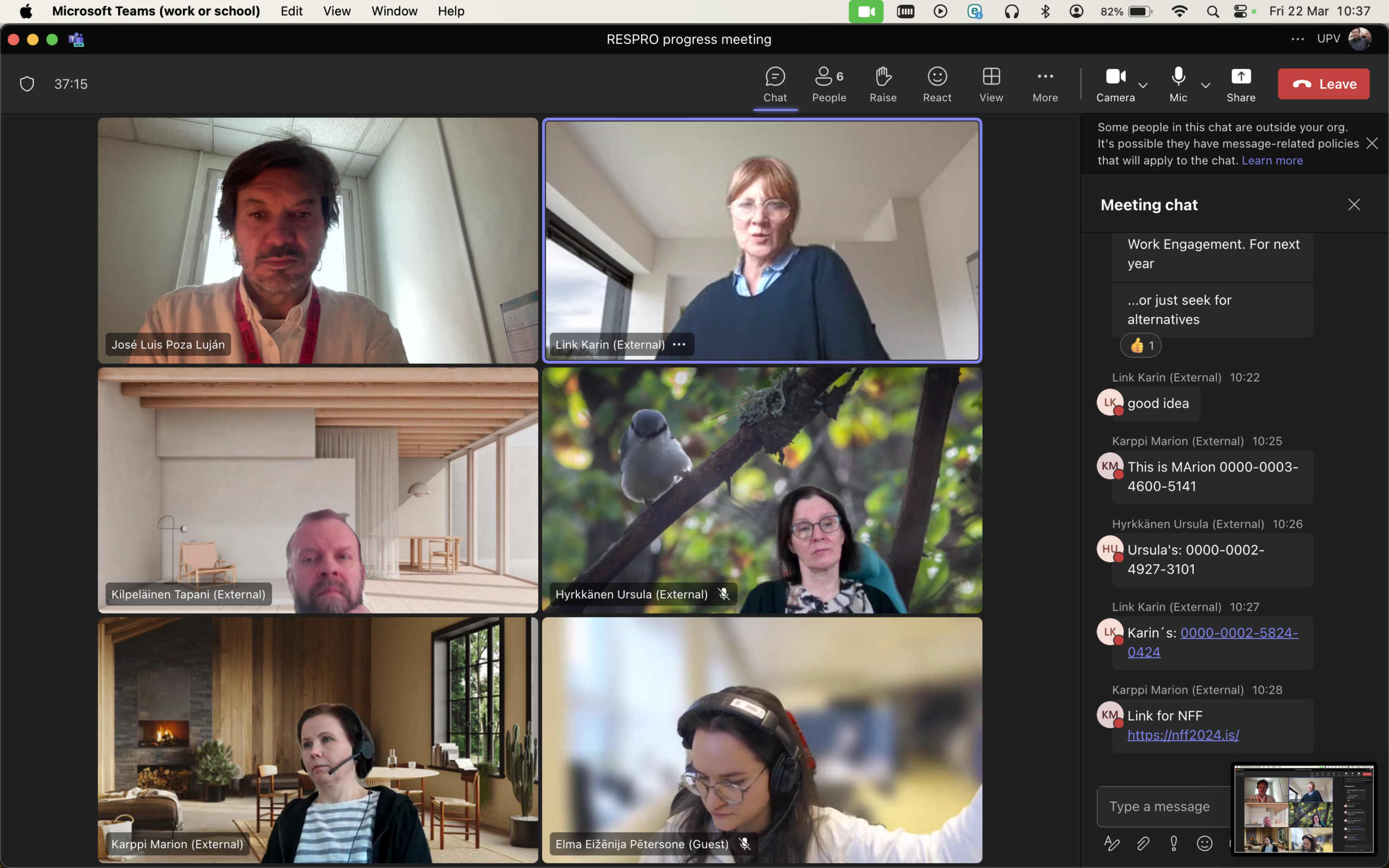
Interesting decisions must be made in any project. At RESPRO, the intensive week for testing the courses and the eGame had to be rescheduled in accordance with Wiener Neustadt’s TPM (Total Productive Maintenance) system. This way, the UPV’s intensive week will have the courses completed and the eGame well underway, making testing easier. These kinds of low-impact but high-yield decisions are common in projects.
Progressing
2024, March
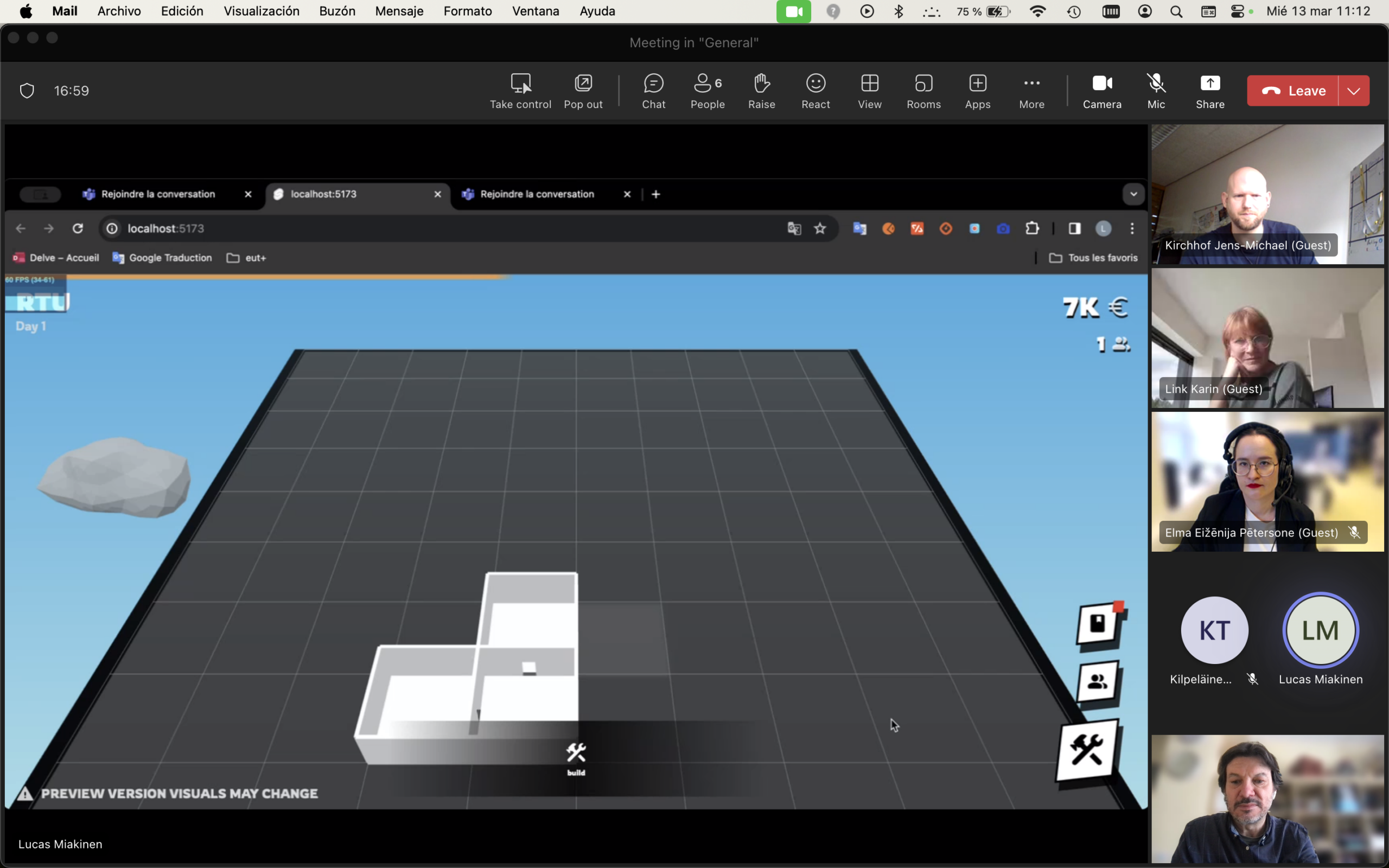
At this stage, with the EAS course methodology already well underway, the design of the game for package 4 has begun. Developing an application for educational purposes is not easy. Initial sketches are shown in the image.
First Months, First Results
2024, first Months
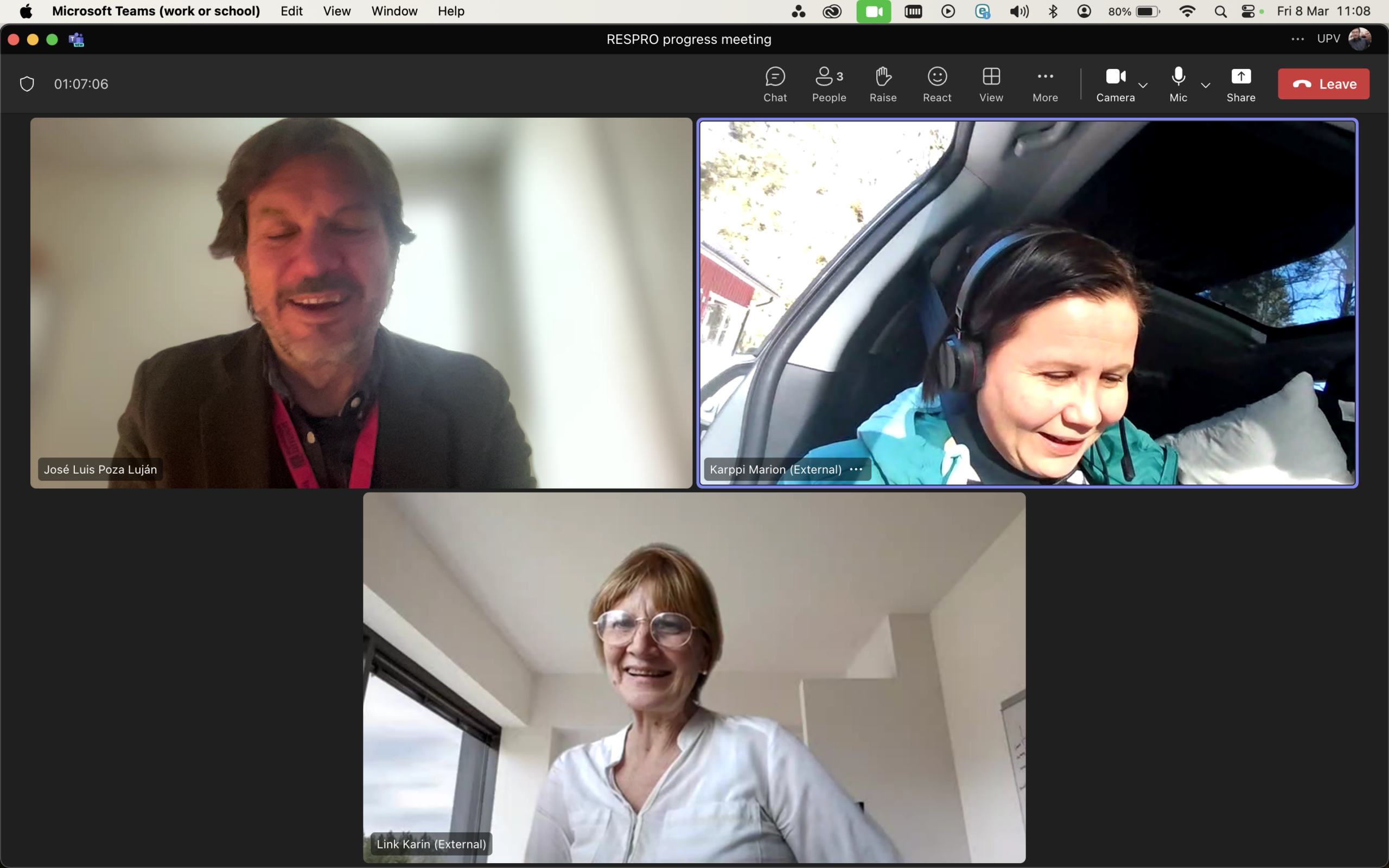
In a 30-month project, it is essential to reach the halfway point with initial results. During these months, meetings revolve around a wide variety of topics:
- Analysis of surveys.
- Finalisation of best practices.
- Finalisation of EAS Course methodologies.
- Initial publications.
Intensifying the project
2024, January
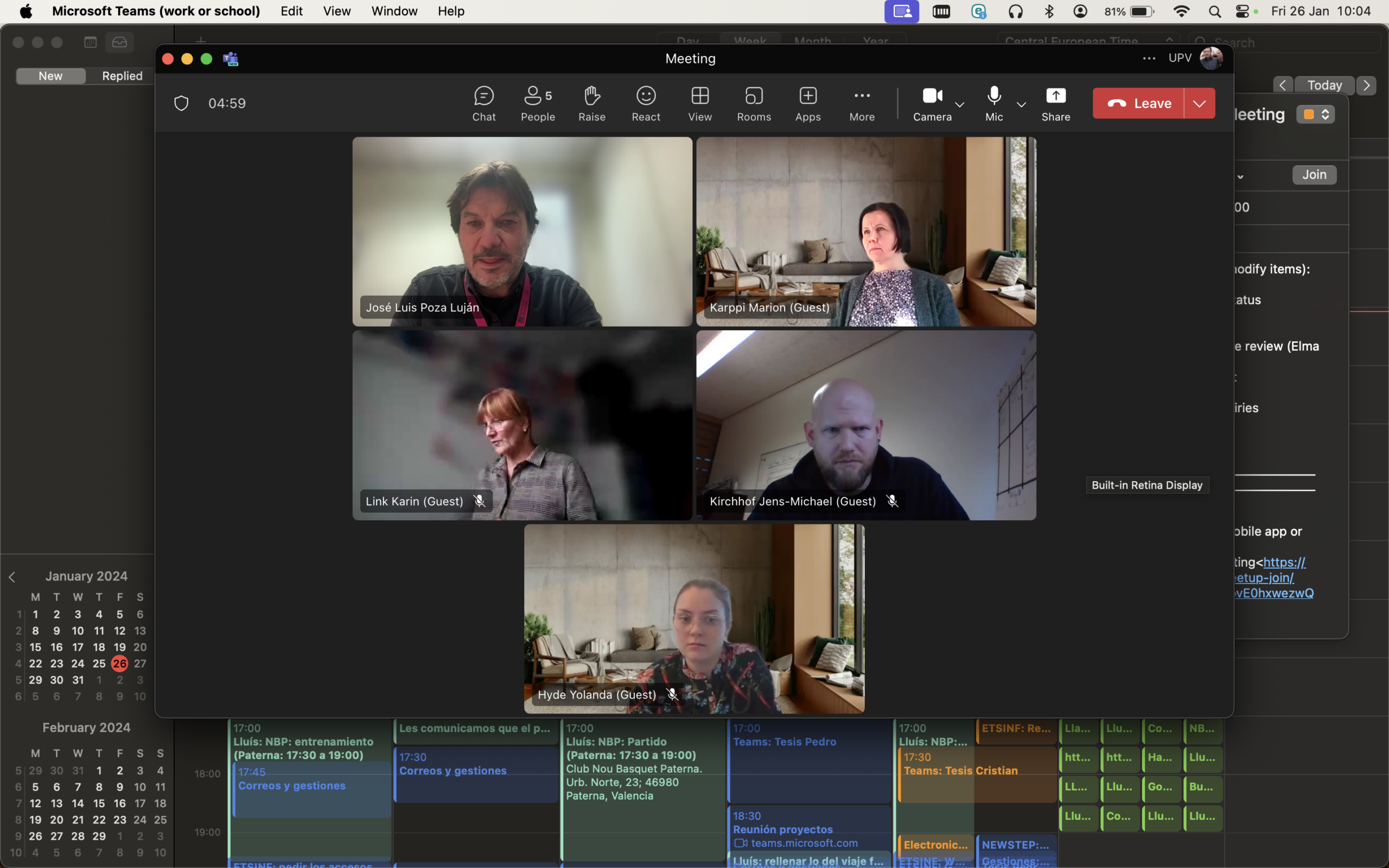
By 2024, before reaching the project’s halfway point, best practices will be in place, survey results will be available, and courses will need to be created. Additionally, the design of the eGame (work package 4) must begin.
First-year reflection
2023, December
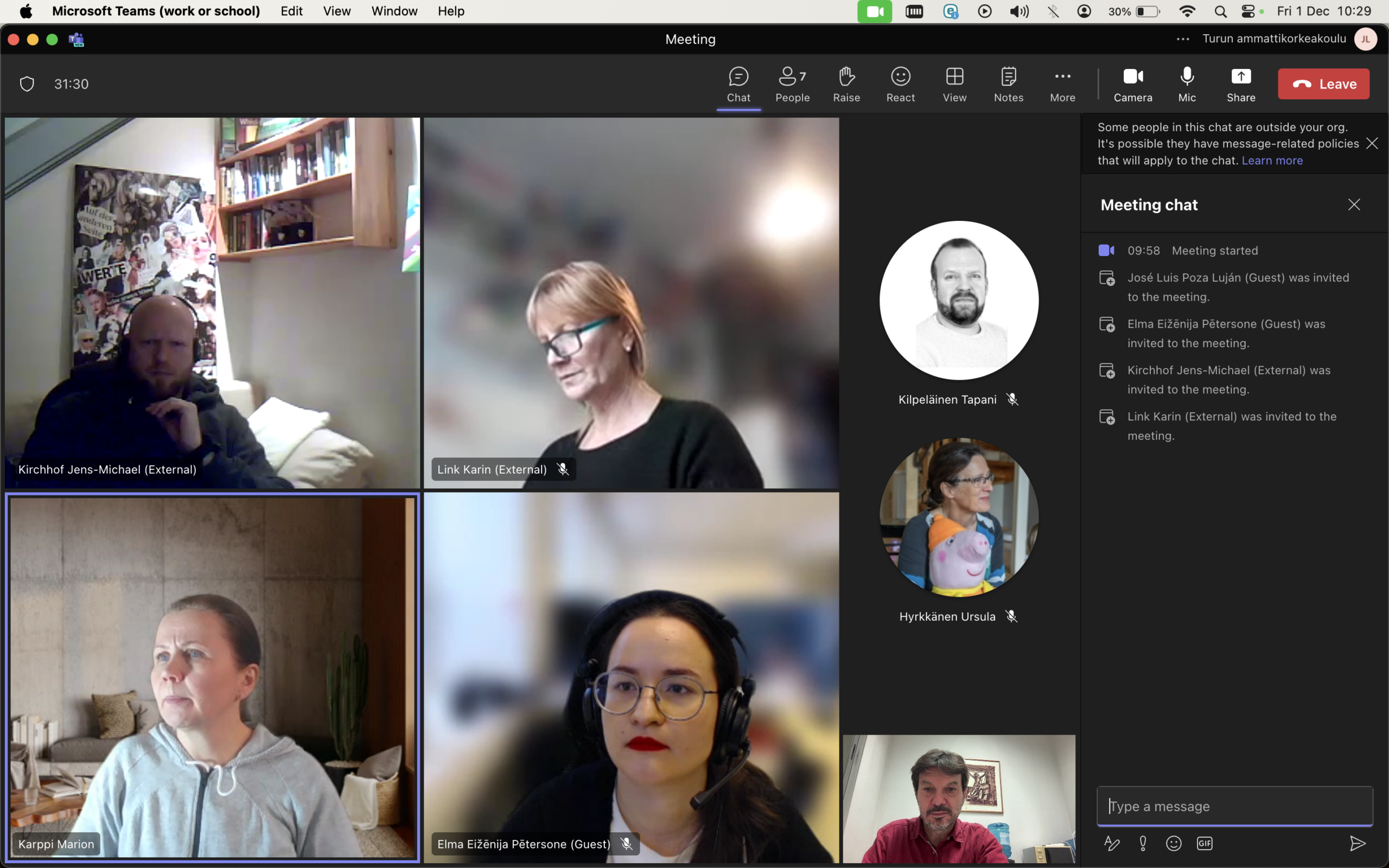
Progress in Surveys, Best Practices, and EAS. In a project, the work packages are interconnected. At this stage of the project, work package 2 (best practices) is well advanced, surveys are being conducted, and work is underway on work package 3 (EAS Courses). Furthermore, efforts are beginning to integrate the initial survey results with the courses.
Minute Meetings
2023, November
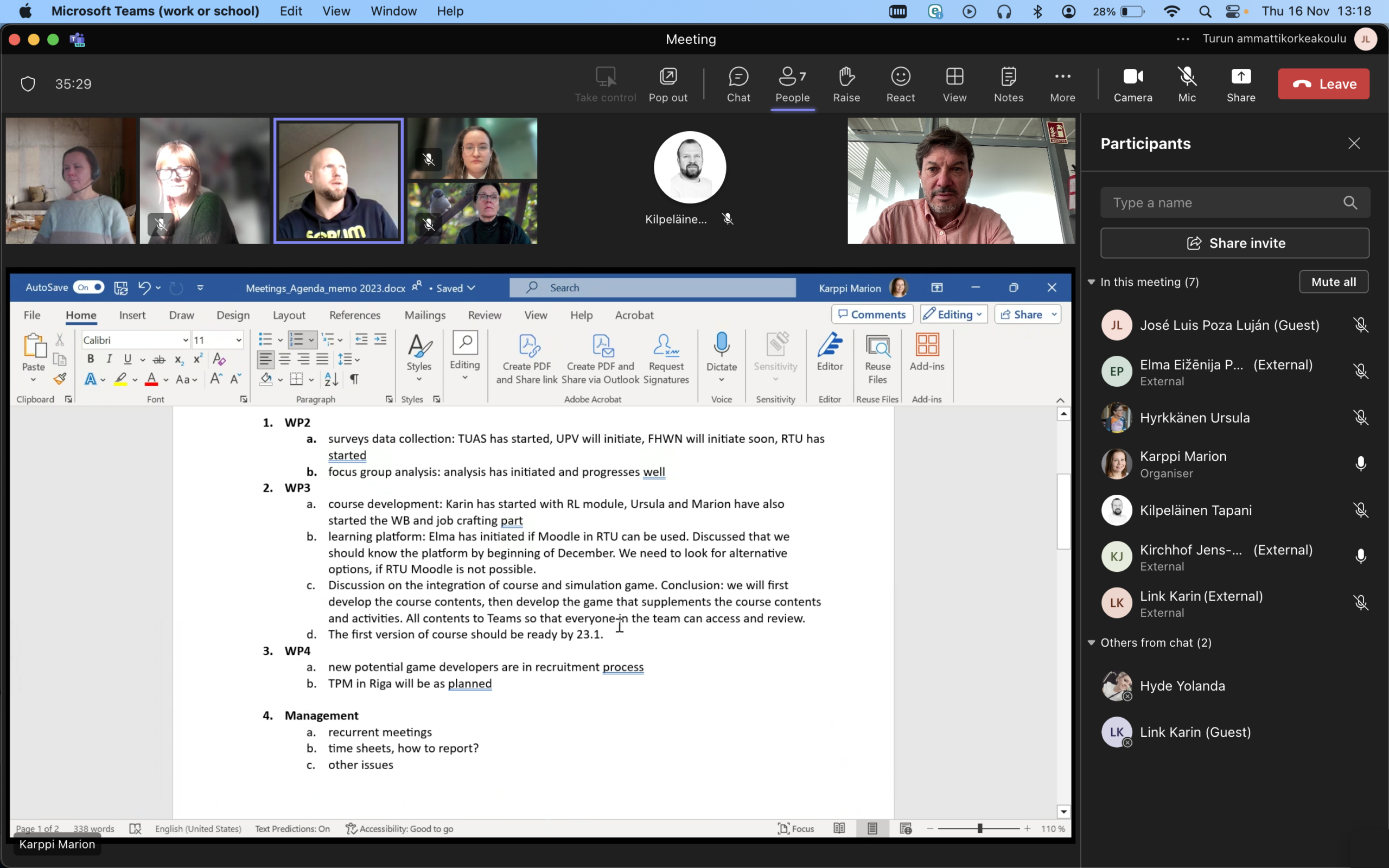
In a 21st-century project, work is often done separately in different locations. It’s crucial to keep a record of everything discussed. Using a shared repository allows for efficient management of these tasks. It’s necessary being able to record all the progress.
Meetings
2023, November
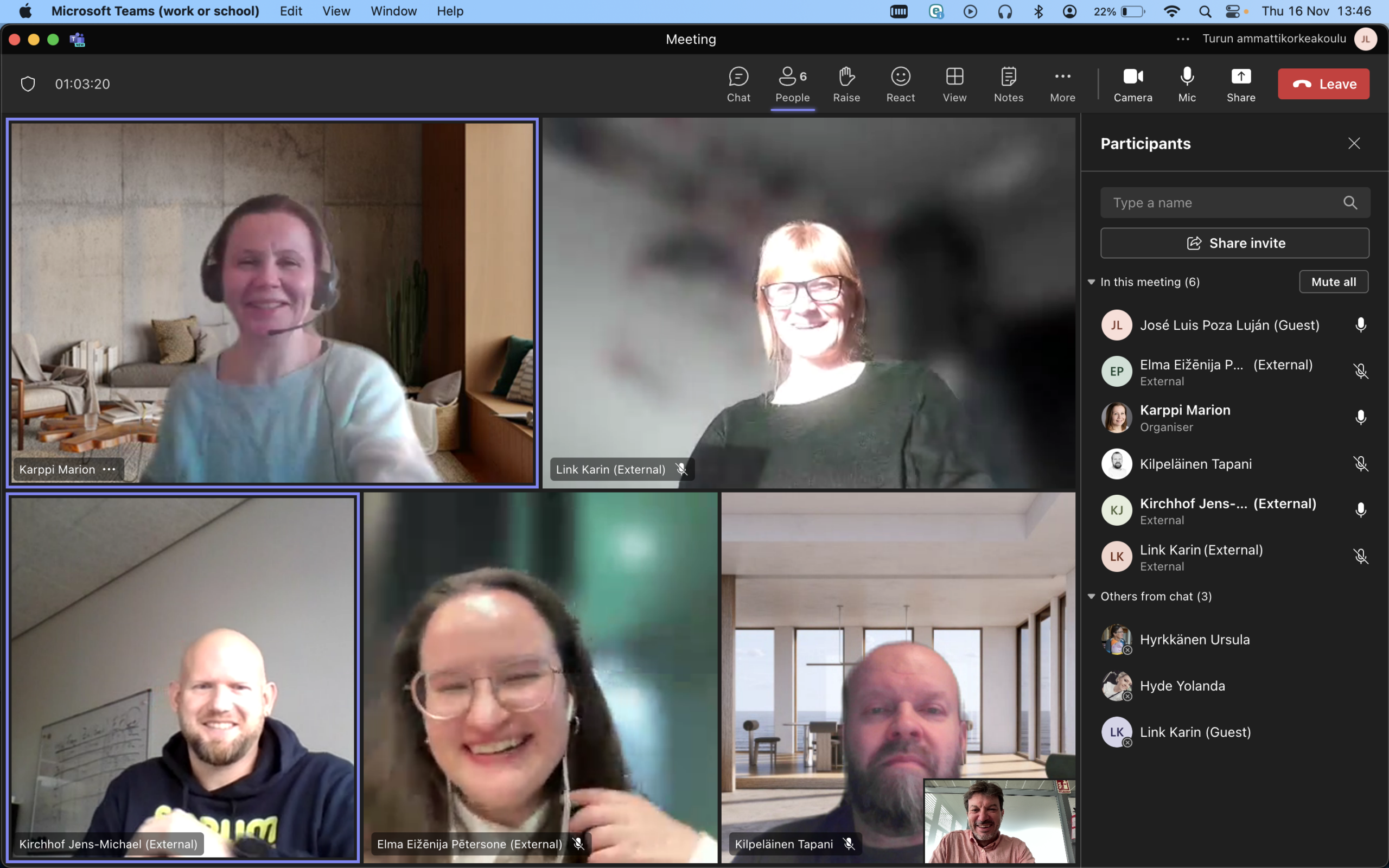
After an in-person meeting, returning to routine online project meetings is difficult. One of the digital skills is managing emotions when you have colleagues on screen with whom you’ve shared a workday.
The hidden tasks
2023, October
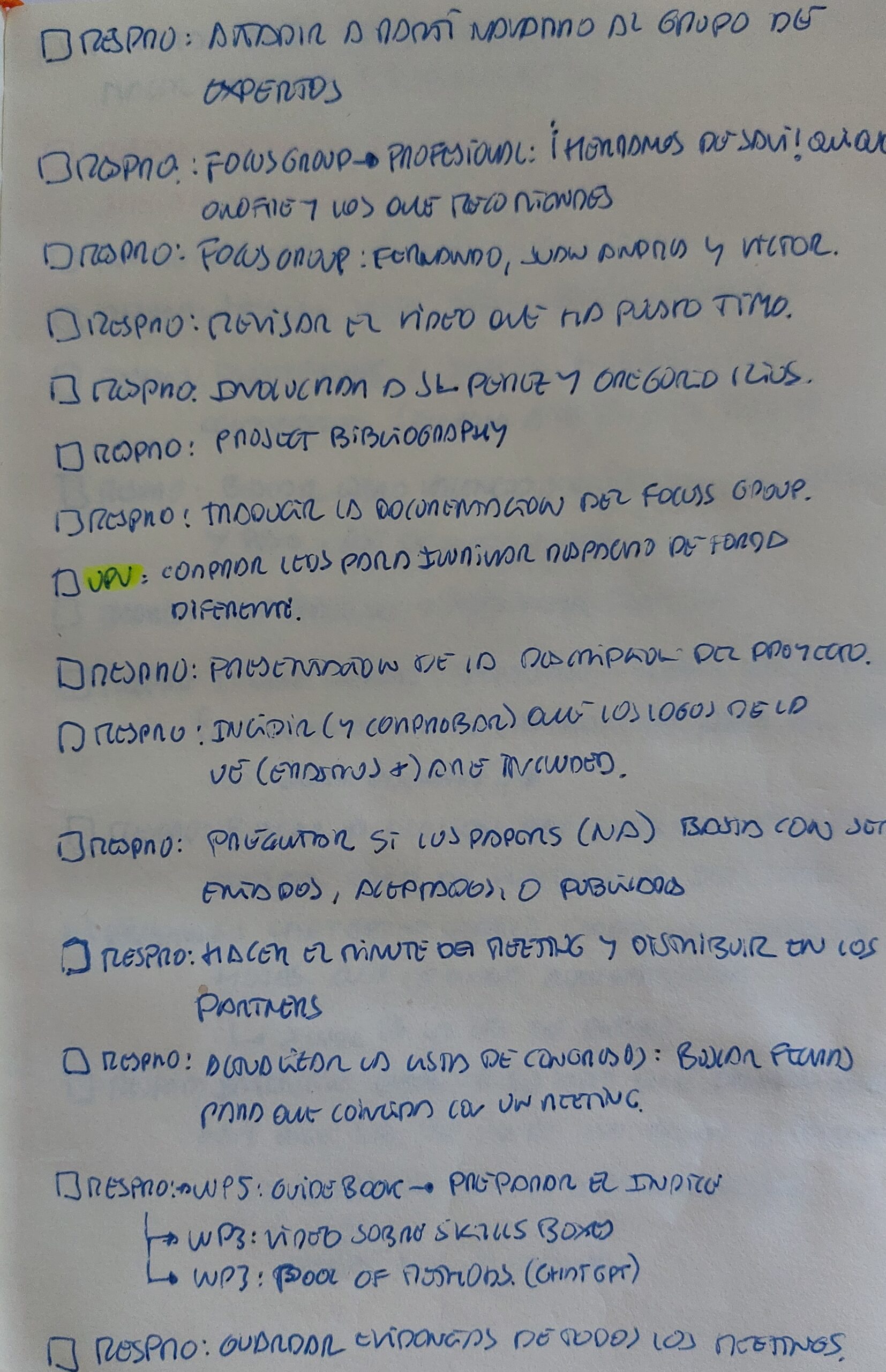
After a TPM (Transnational Project Meeting), a number of micro-tasks emerge in a project, usually unforeseen. It’s essential to document everything that arises, as these details are what contribute to the project’s quality. The image shows just one page of tasks (in Spanish).
Meeting in Wiener Neustadt
2023, October
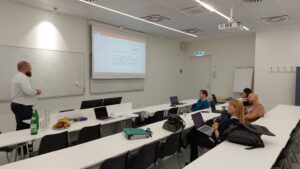
The Transnational Project meeting in FHWN in Wiener Neustadt (Austria) served many purposes.
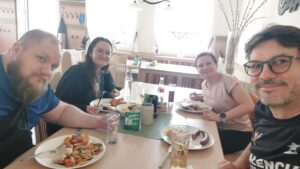
Besides being the first time all the partners had met in person, it also helped to review the project’s progress at a crucial point (roughly 20% complete).
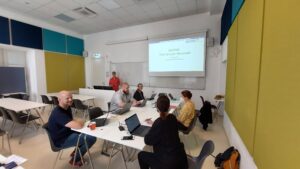
These working sessions, more than just meetings, allowed for better task planning, evaluation of objectives, updates, and, above all, team cohesion.
Initial results
2023, September
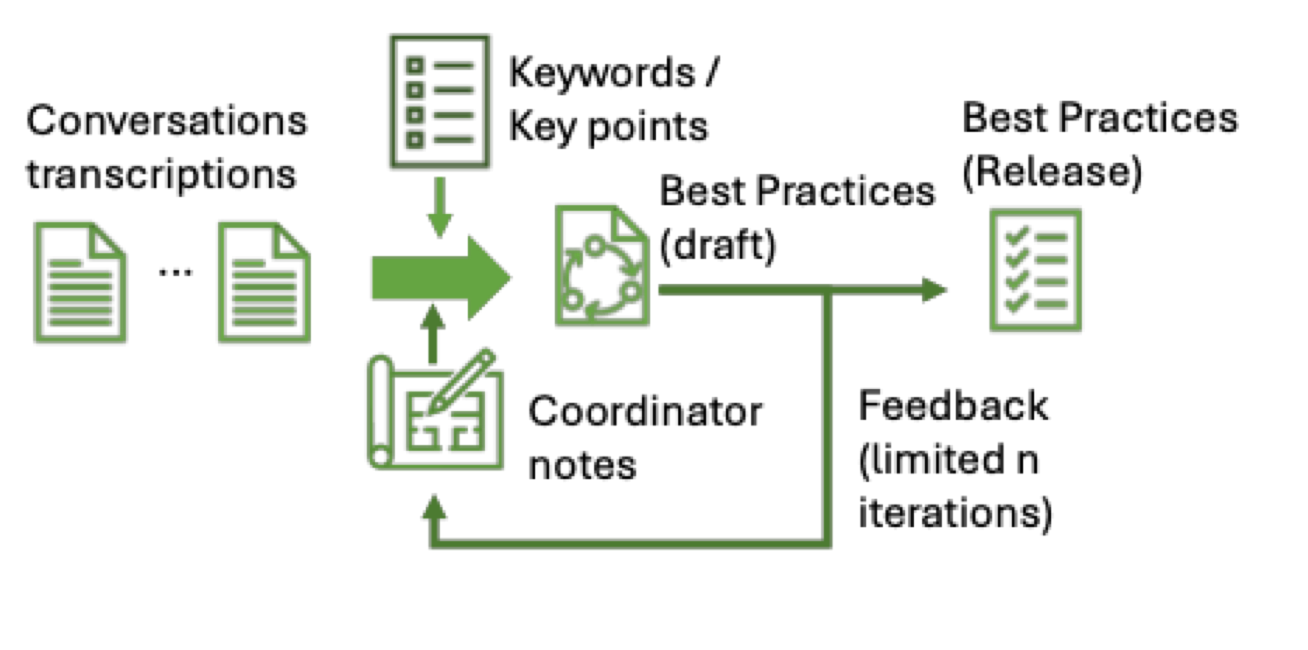
Focus groups and surveys ready for review and adjustment. We’ve begun outlining “Best Practices,” and an interesting first outcome is the “method” for conducting focus groups.
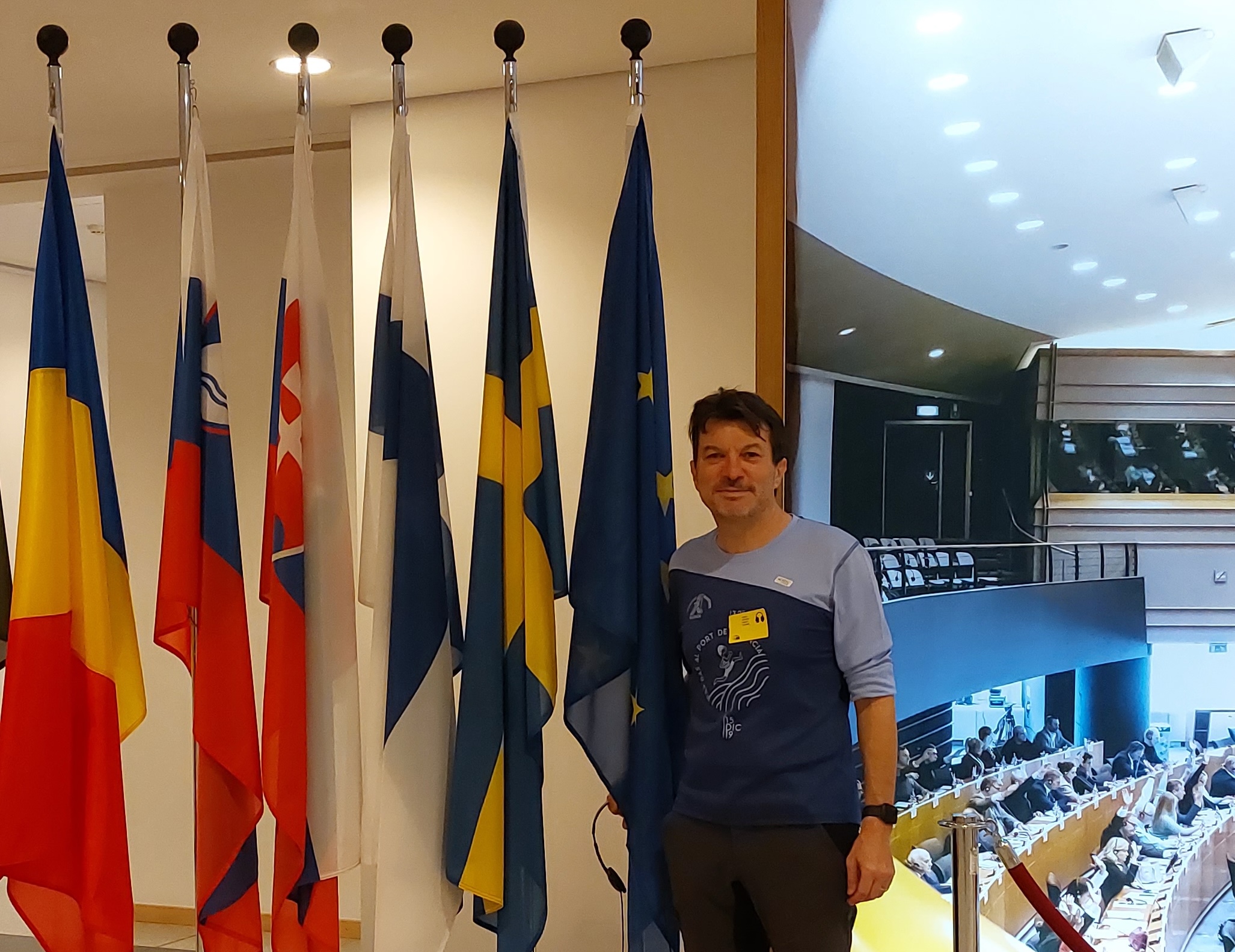
Visit EU
2023, August
Visit to EU parliament to learn firsthand how the entire structure of European projects works.
Initial Focus Groups
2023, June-July
Most of the focus groups were conducted in June and July 2023. Student and teacher surveys were scheduled for the start of the 2023-2024 academic year.
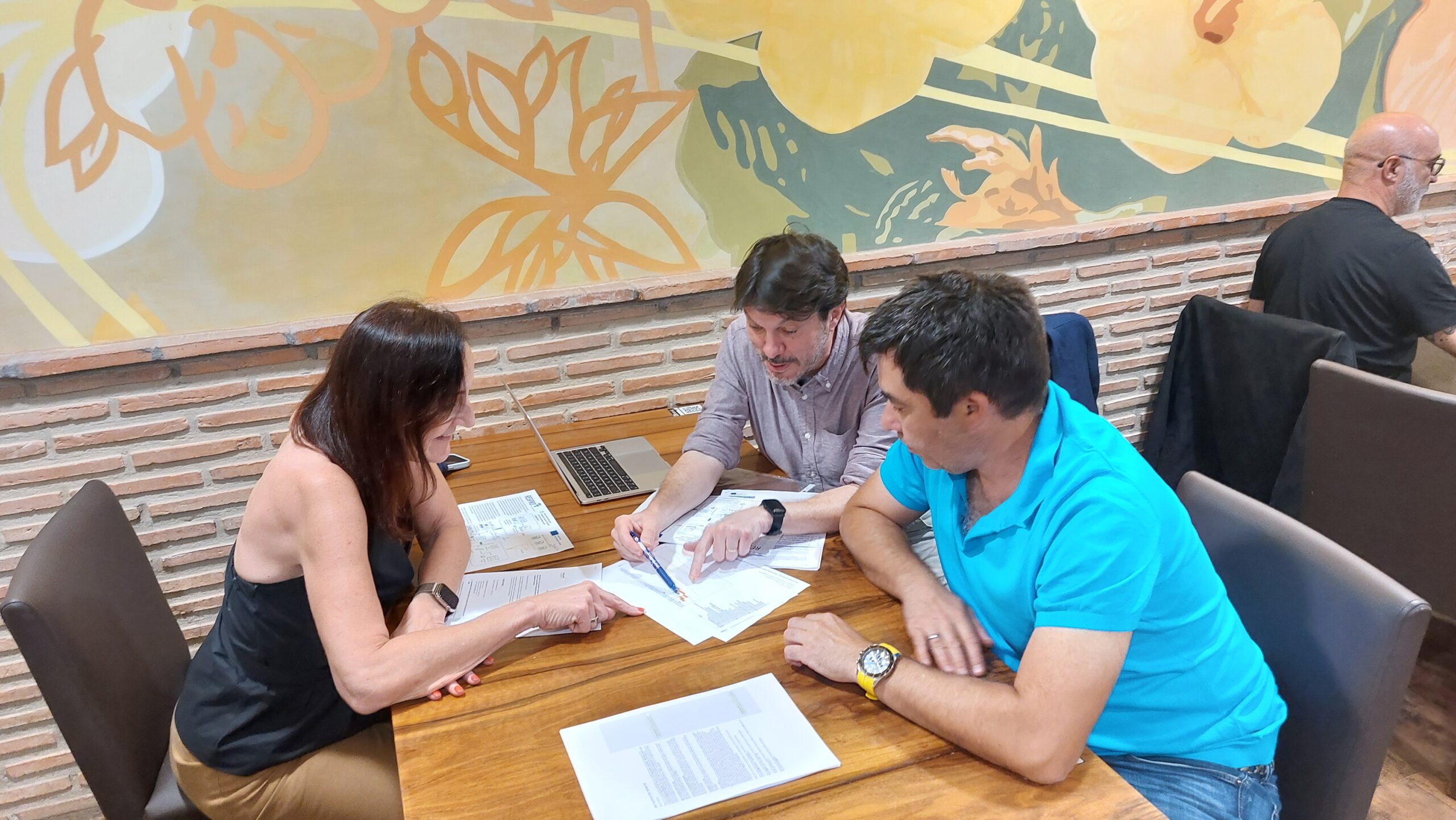
Adjustments
2023, May
Jose-Luis Poza-Lujan, Alberto Conejero, and Nuria Lloret (UPV) planned the actions in Valencia (Spain). This included both the surveys to be carried out during the 2023-2024 academic year (Alberto) and the Focus Groups (Nuria).
Initial Reviews
2023, May
Marion Karppi (Turku UAS RESPRO coordinator) traveled to UPV to work on the project.
We reviewed concepts with teachers and students (main photo) to confirm that all aspects necessary for the surveys and focus groups were being addressed correctly.
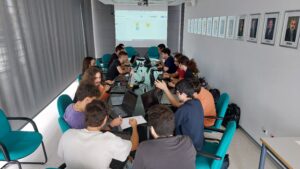
In addition, meetings with other research groups allow for the establishment of new contacts for future collaborations.
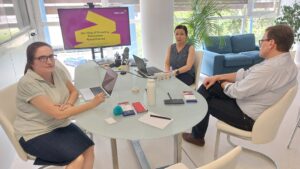
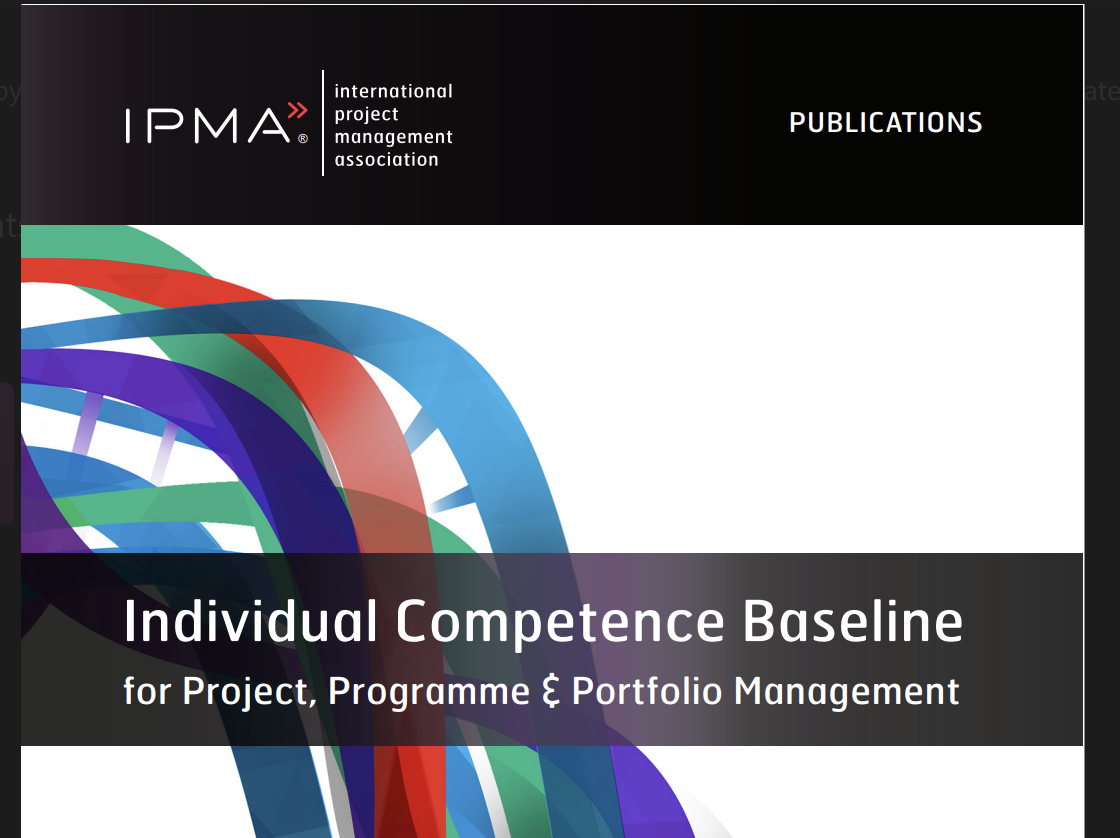
Prepare surveys and focus groups.
2023, May
The initial literature reviews for the design of the surveys were based on the principles of PMI and IPMA, as detailed in the project. Reviewing the literature is important to update concepts that have changed since the project was prepared.
RESPRO logo
2023, April
The logo, the project’s main image, and the color and style guide had already been finalized by our partners at RTU. One of the “hidden” milestones of a project is having its name, but having a logo also helps build team cohesion.
Common Management
2023, March
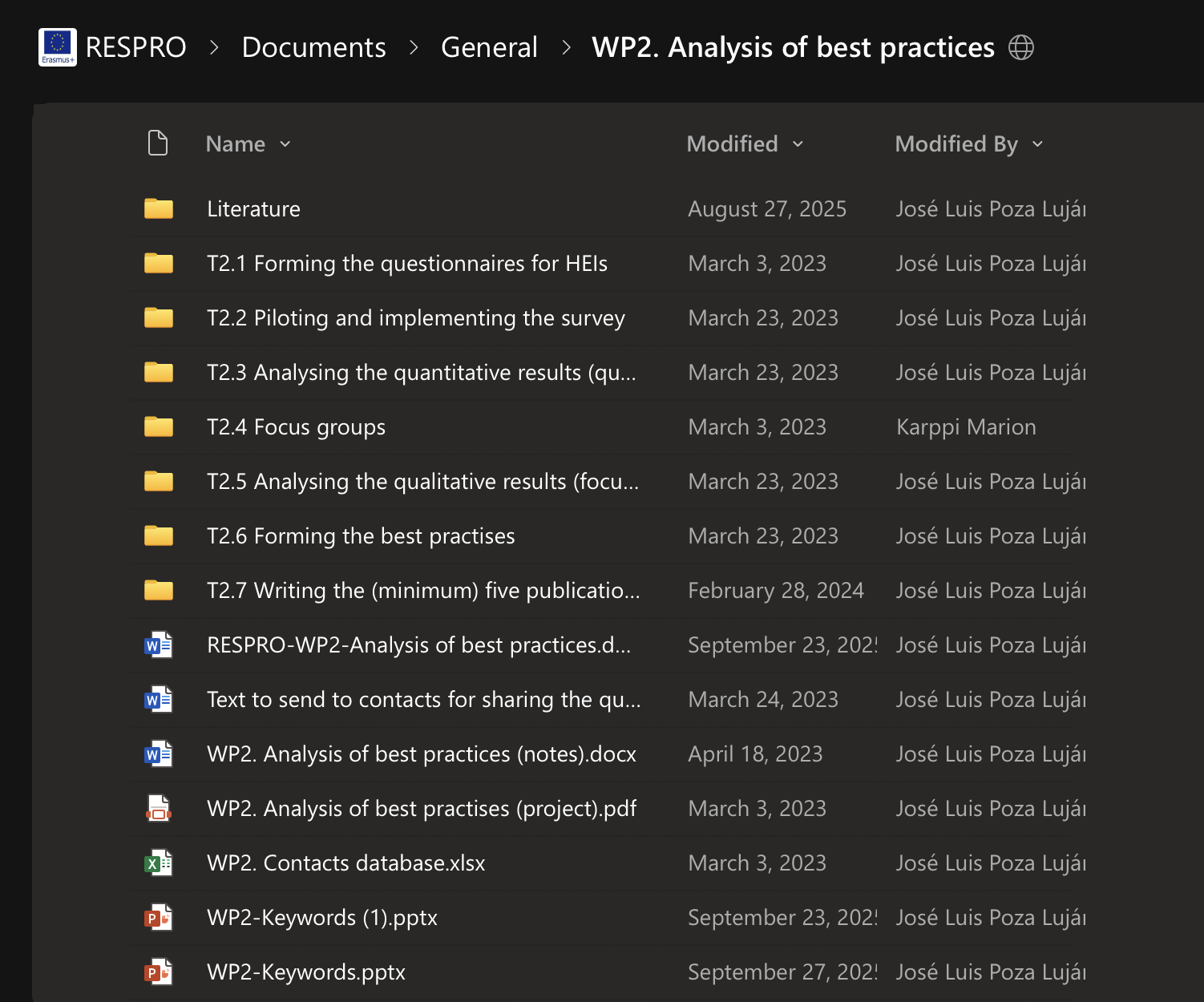
One of the aspects emphasised in the project is maintaining consistency in the file repository. The image shows the folder corresponding to work package 2 with the subfolders corresponding to each task and the common elements.
Initial meetings and preliminary work
2023, March
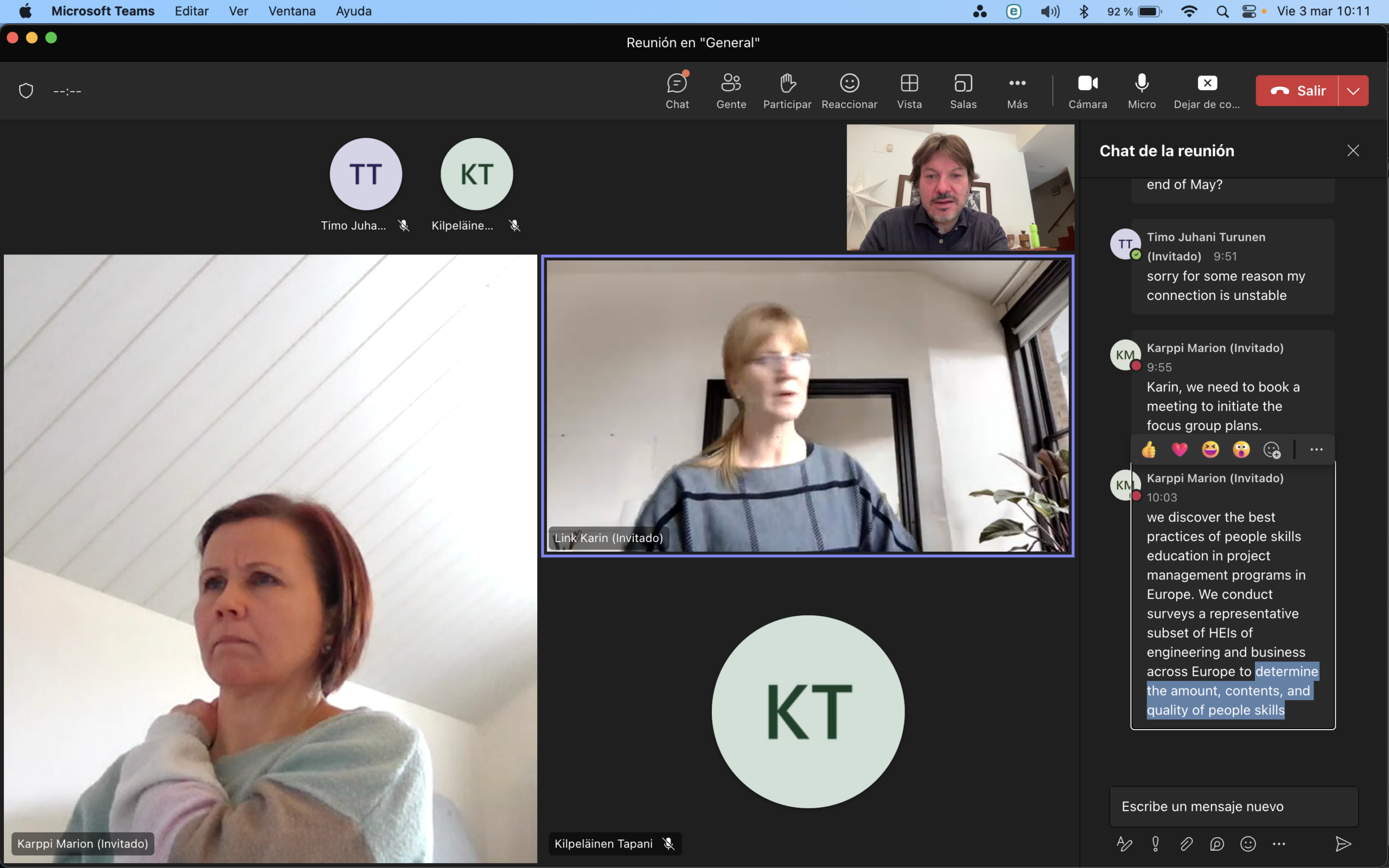
The second meeting established the foundations for the initial project plans (quality, etc.). The final versions (after numerous revisions) can be found on the results page.
Kick-off meeting
Early 2023
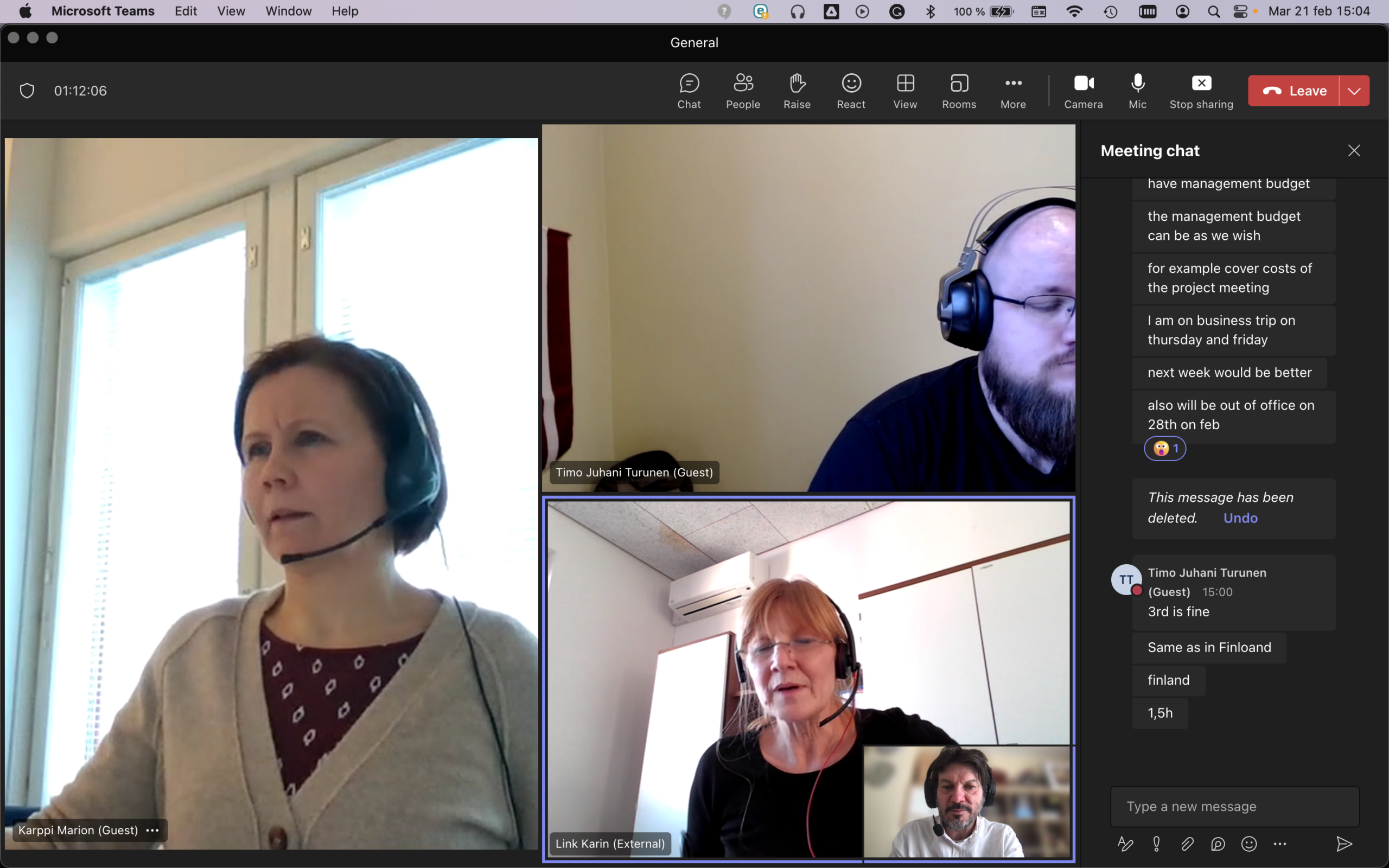
The first kick-off meeting was held in February 2023 where all tasks were reviewed to plan them properly, work teams were generated and work tools were established.
Project approved.
End of 2022
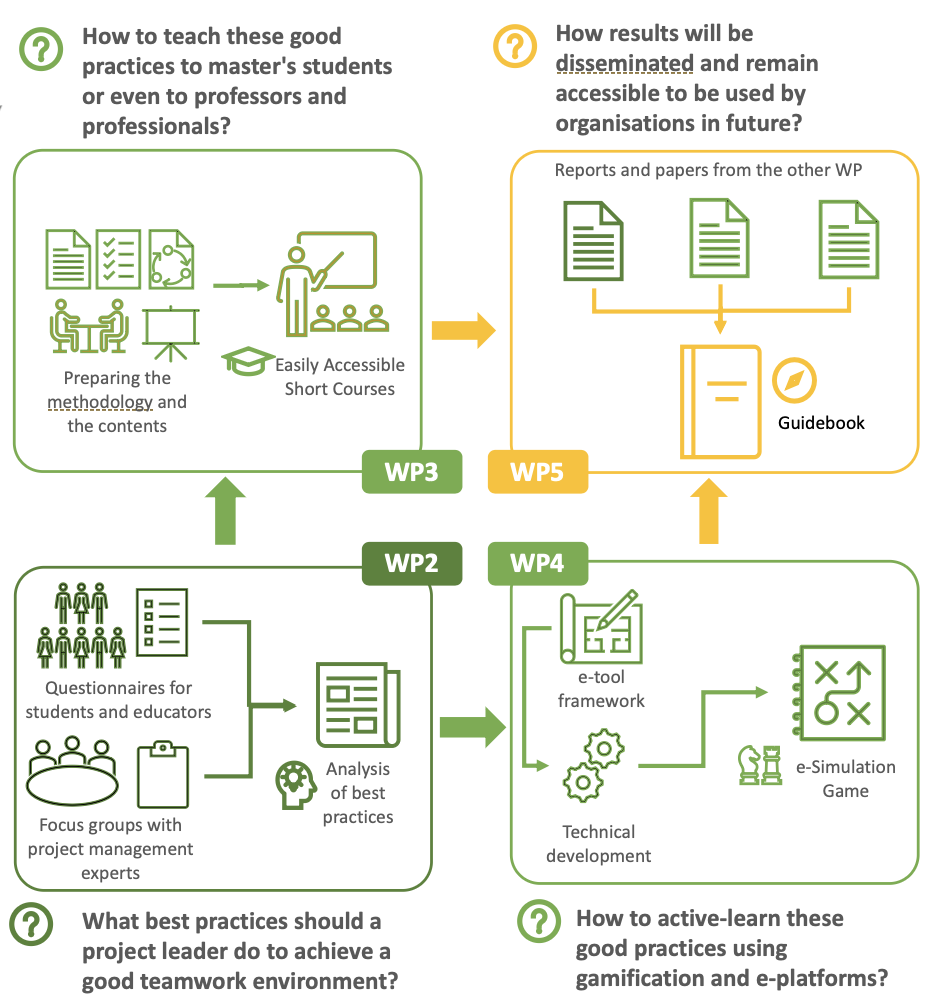
Project approved. End of 2022. The project was approved, and from that moment on, we got started.
We developed the Graphical Abstract as an initial guide to the final results.
Project submitted
2022,. March
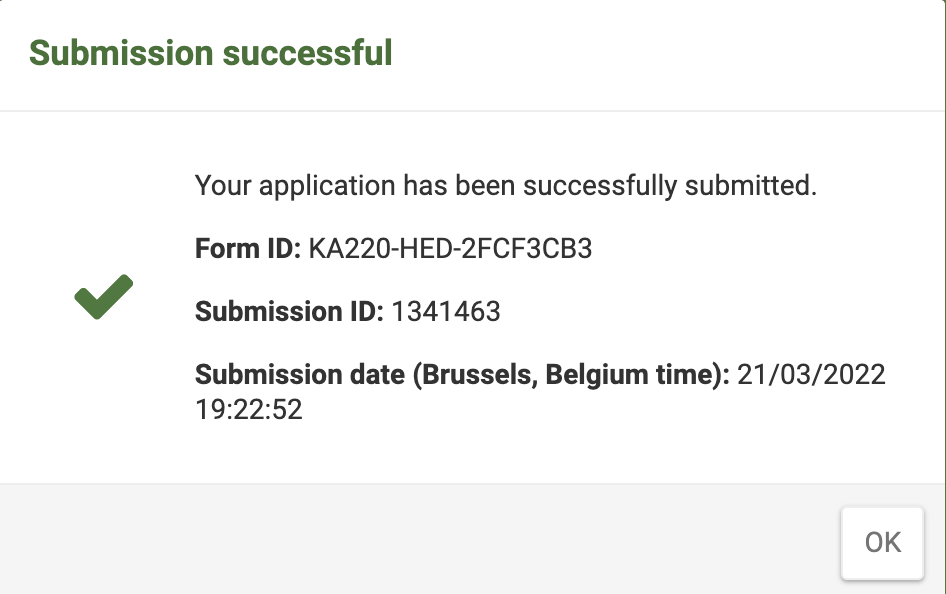
Finally, after a year of preparation, the project was completed and submitted for evaluation.
Preparatory meetings
Early 2022
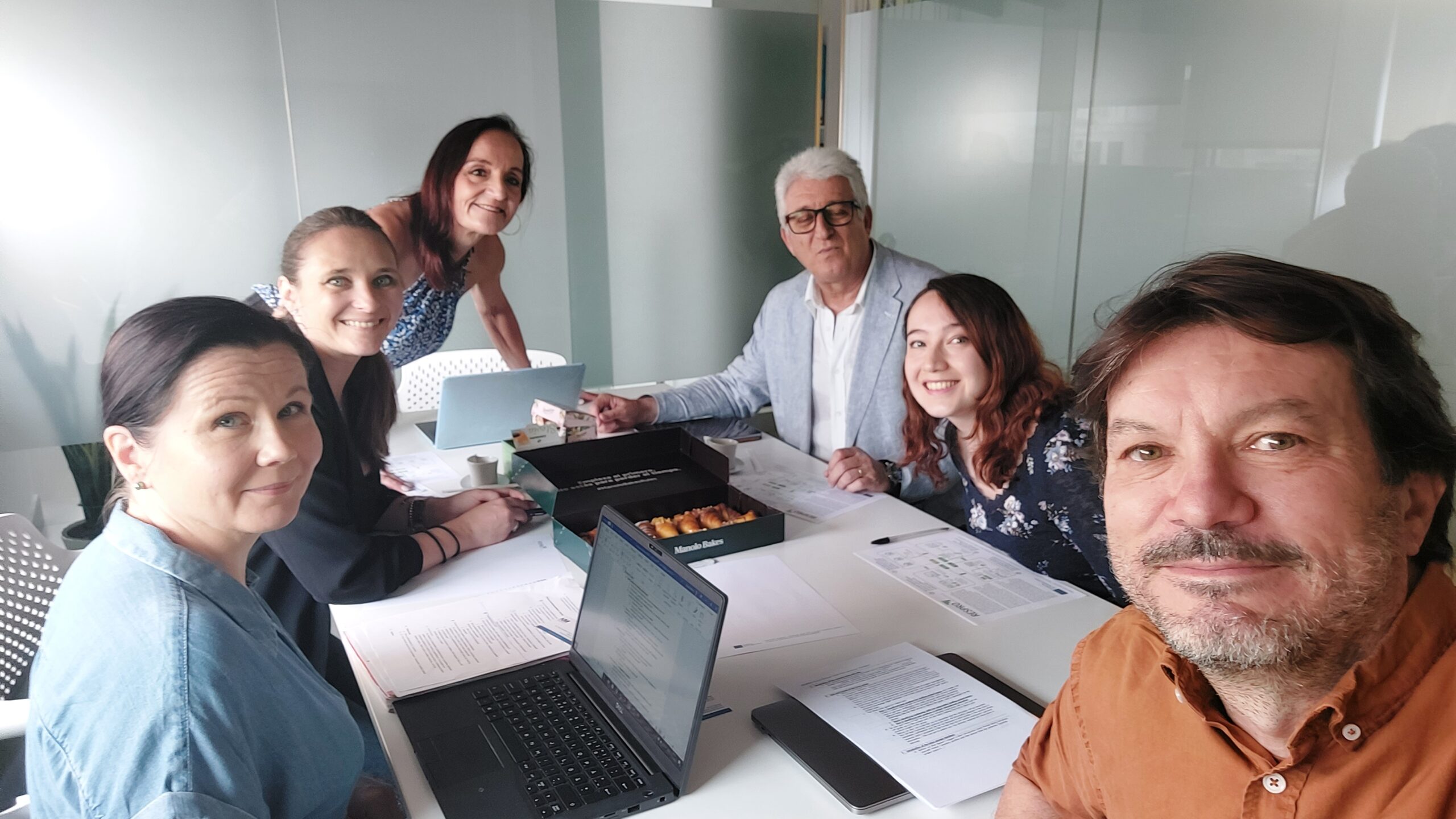
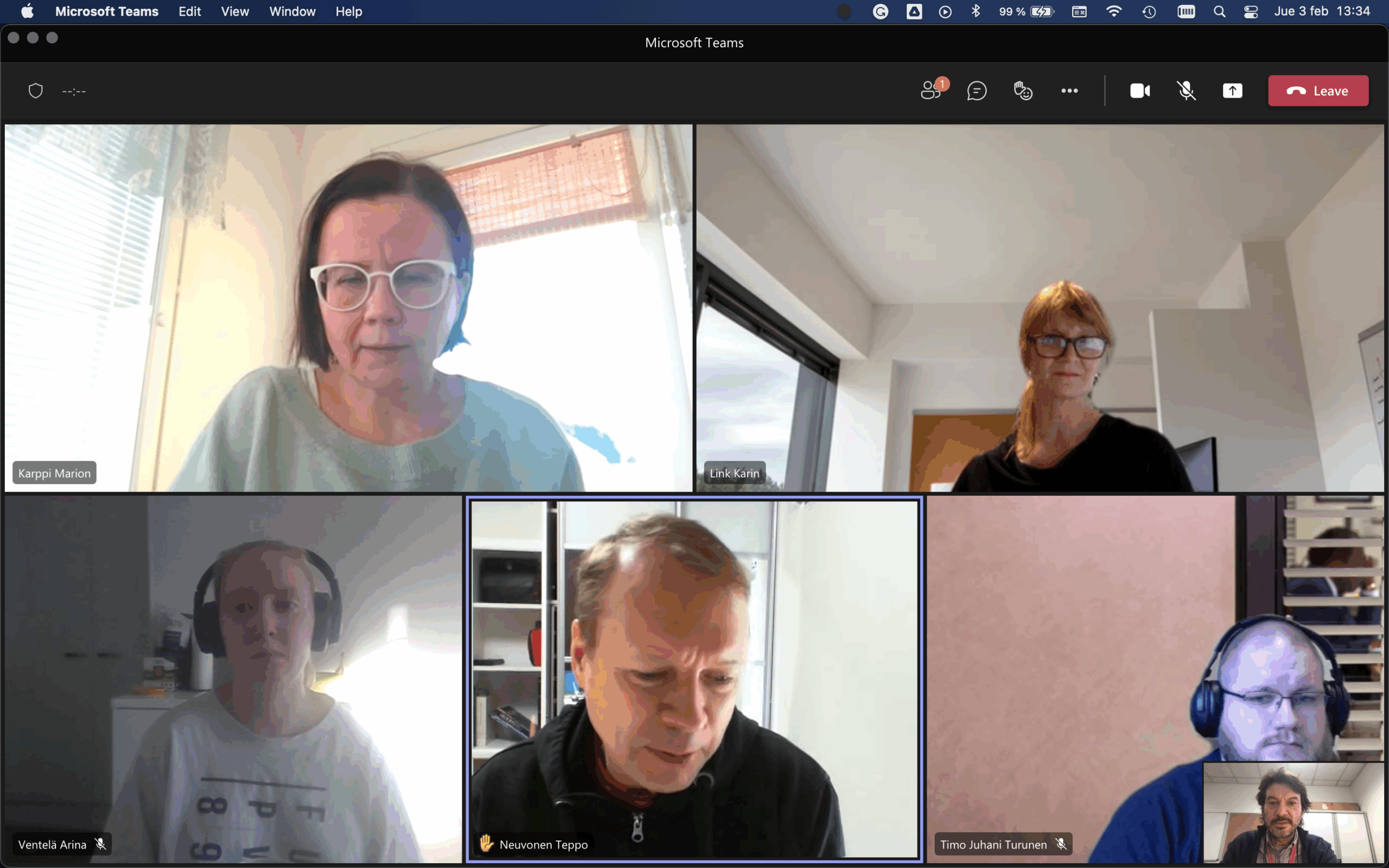
During 2021 some preparatory meetings was made, the project RESPRO was created to develop the emerging ideas took shape. (Image of one of the many preparatory meetings, February 2022).
Refining the project
2021
Along 2021, to refine and adjust the project, feedback from evaluators of a previous project submitted by the partners was used. This feedback was invaluable and helped guide RESPRO in the right direction.
The image shows one of the review documents with the comments made in one of the preparatory meetings.
The project
2021
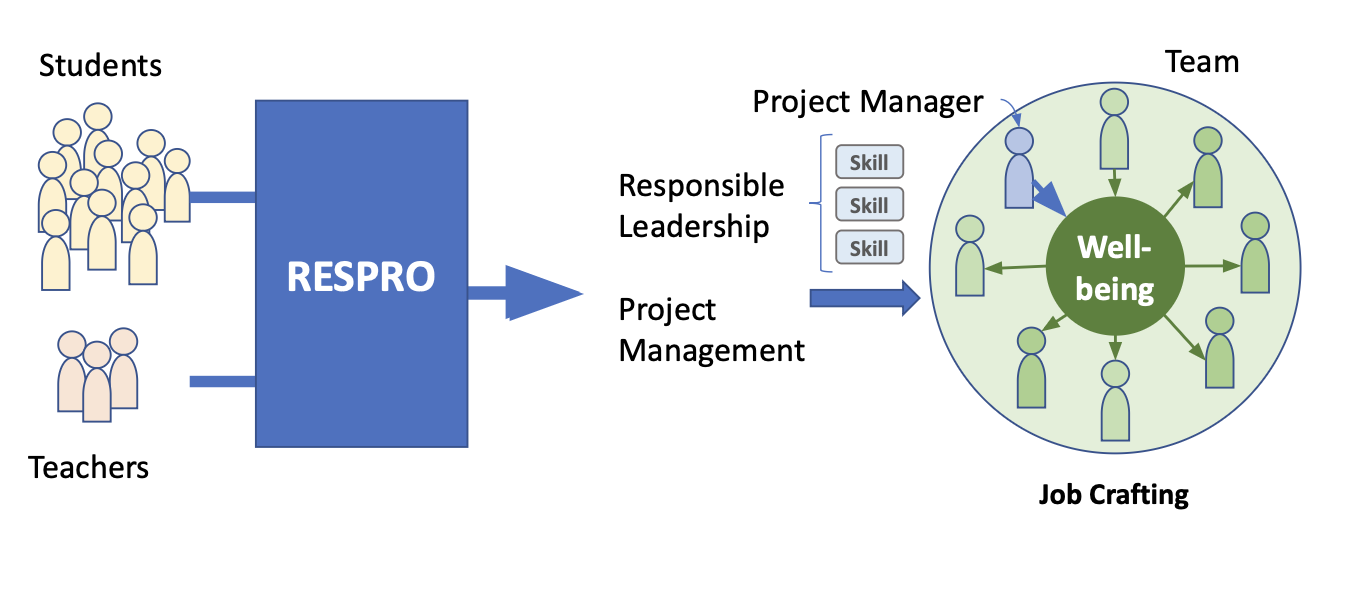
Turku UAS (as a previous partner in CoSki21), with FHWN and RTU as new partners, create a group pf interest in the project management skills . Gradually, the project idea is taking shape, focusing on three key aspects: responsible leadership aimed at team well-being, and job crafting as a method for achieving it. Image: one of the diagrams created collaboratively during the meetings (November 2021).
Focusing on project management: Leadership.
Early 2021
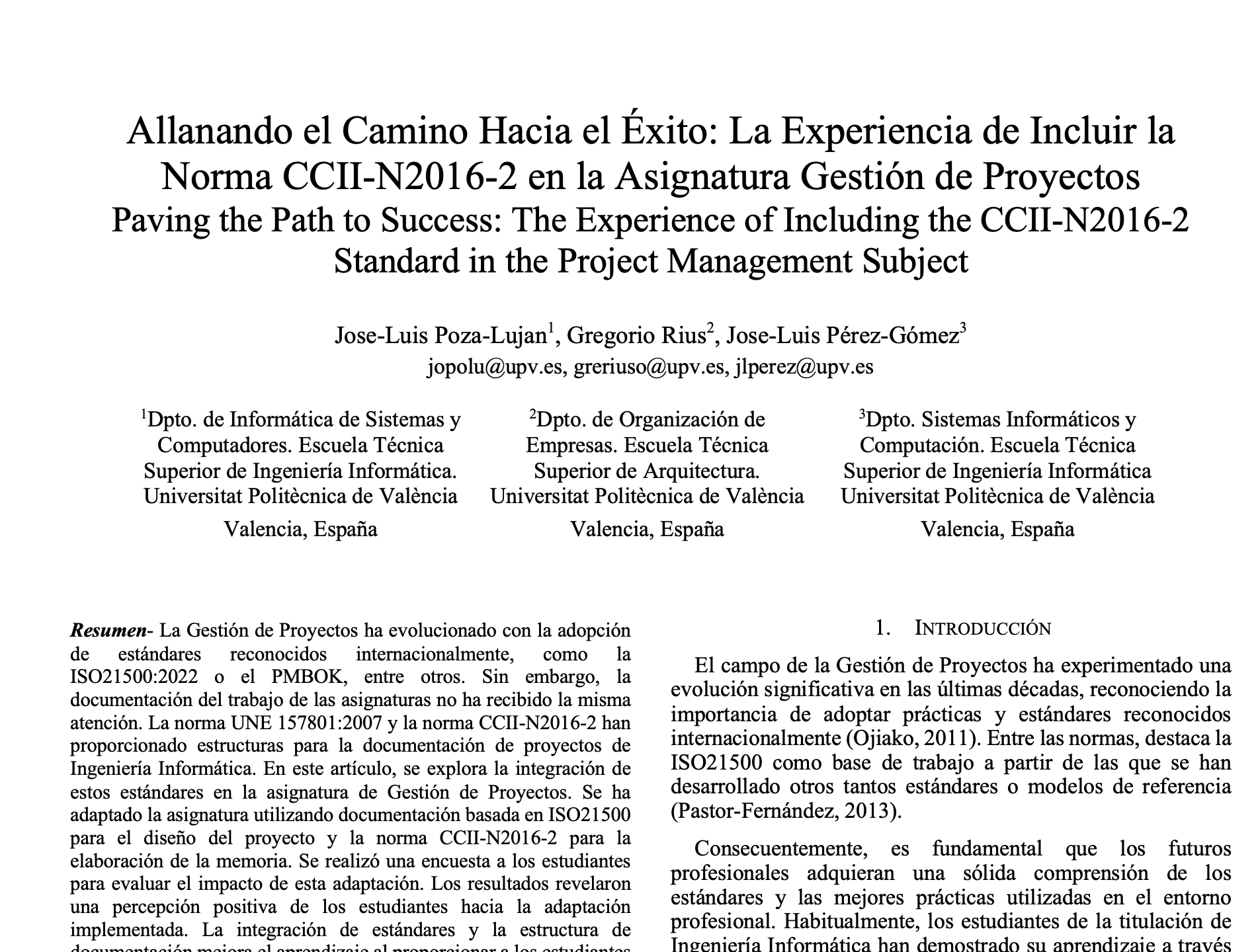
Contacting various partners, we found that their project management courses lacked training in skills for effectively leading projects. For example, in the following article (in Spanish), although focused on the assessment tool, a student survey revealed a need for skills beyond training in standards and tools.
- Poza-Luján, J. L., Pérez-Gómez, J. L., & Rius-Sorolla, G. (2023). Allanando el Camino Hacia el Éxito: La Experiencia de Incluir la Norma CCII-N2016-2 en la Asignatura Gestión de Proyectos(No. COMPON-2023-CINAIC-0094). Universidad de Zaragoza, Servicio de Publicaciones.(Scholar)
The origins: Needs to be addressed
Before 2021
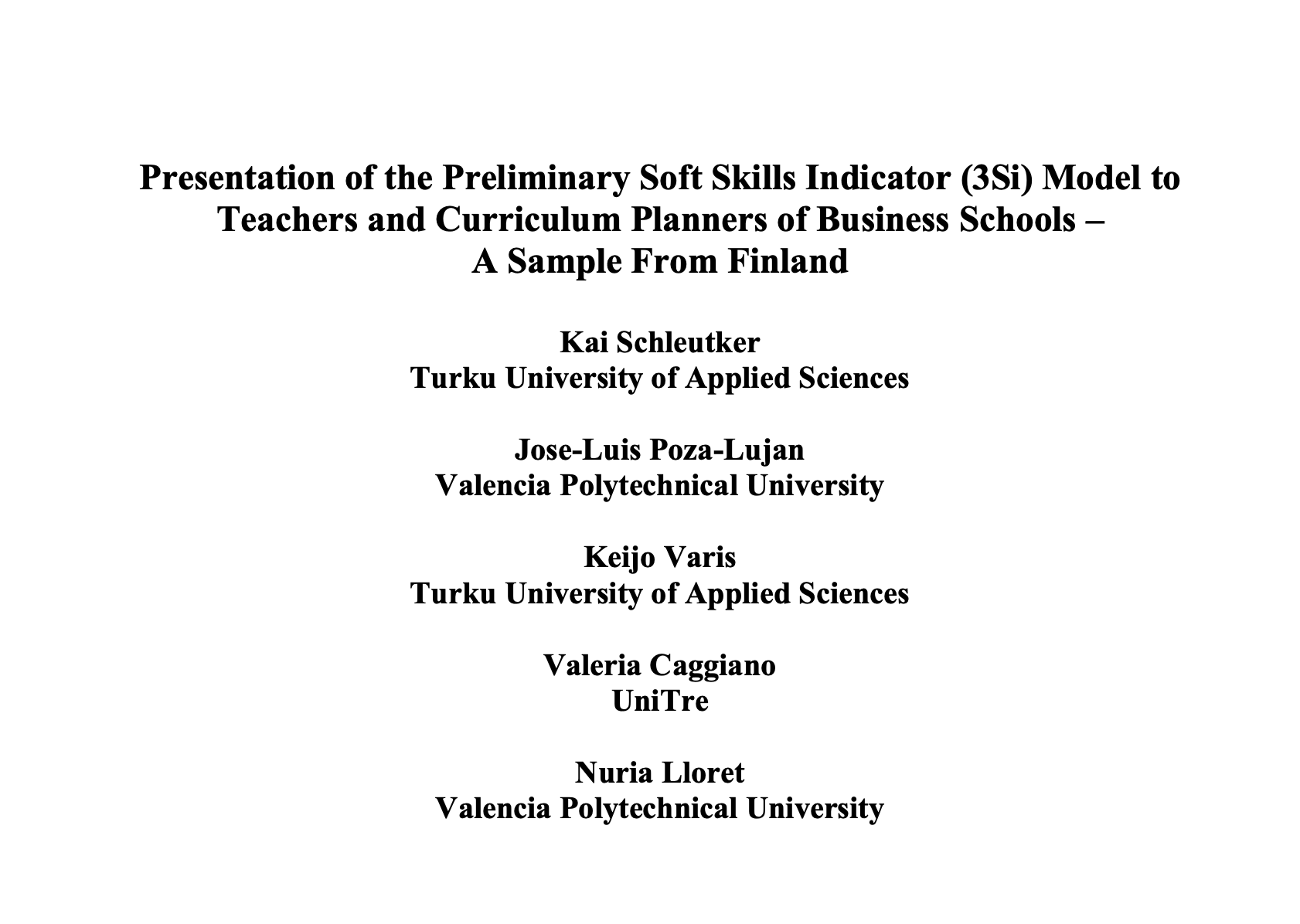
After the pandemic, upon returning to classrooms, several partners noticed a gap in students’ development of soft skills. This gap had already been studied by partners in the CoSki21 project and published in various articles. Among the most requested skills, leadership was one of them. However, this leadership was not seen as a way of issuing orders or coordinating team members, but rather from the perspective of responsible decision-making and a leader who fosters a mentally healthy team, especially after the pandemic.
These needs were highlighted in previous publications as follows:
- Schleutker, K., Poza-Lujan, J. L., Varis, K., Caggiano, V., & Lloret, N. (2023). Presentation of the Preliminary Soft Skills Indicator (3Si) Model to Teachers and Curriculum Planners of Business Schools–A Sample From Finland. Journal of Higher Education Theory and Practice, 23(13), 19-33. (Scholar)
- Bastos, S., Silva, M., Oliveira, H. M., Caggiano, V., & Poza-Lújan, J. L. (2021). Digital-Distance-Education: A Step Back?. Psychology, 58(3), 2733-2740. (Scholar)